






What's Happening?
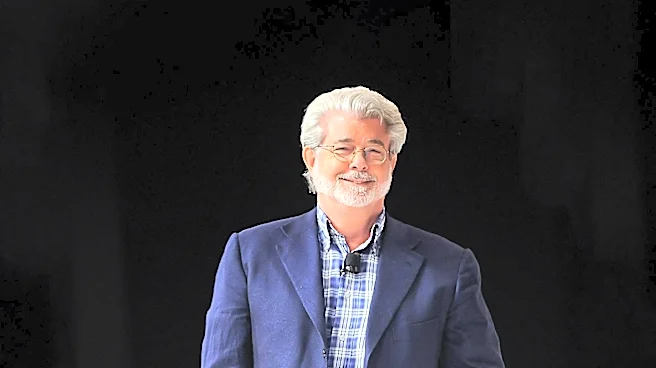
The Lucas Museum of Narrative Art, founded by Star Wars creator George Lucas, is set to open in Los Angeles on September 22. Despite its promise as a 'temple to the people's art,' the museum has drawn criticism for its $25 adult admission fee and its solicitation
of public donations. This approach contrasts with other billionaire-funded museums in the U.S., such as the Crystal Bridges Museum of American Art and the Glenstone Museum, which offer free admission. The museum, located in a low-income, racially diverse area of South Los Angeles, has been criticized for not fully embracing its potential to serve the local community. The museum's collection includes works by artists like Norman Rockwell and Frida Kahlo, as well as Star Wars memorabilia, and aims to focus on the art of visual storytelling.
Why It's Important?
The controversy surrounding the Lucas Museum highlights broader issues of wealth inequality and access to cultural institutions. In a city with significant economic disparities, the decision to charge admission fees could limit access for local residents, undermining the museum's mission to be a community resource. The museum's approach contrasts with other institutions that have prioritized free access, raising questions about the role of private wealth in public cultural offerings. The situation underscores the challenges faced by cultural institutions in balancing financial sustainability with public accessibility, particularly in economically diverse areas.
What's Next?
The museum has introduced the 'LM37 Pass,' offering free admission to residents of its immediate zip code, but this has sparked further debate about inclusivity, as other nearby areas are excluded. The museum's spokesperson has emphasized its commitment to providing access opportunities, including free admission for certain groups and free access to its gardens and research library. As the opening date approaches, the museum may face increased pressure to reconsider its pricing strategy and community engagement efforts. The response from local residents and cultural critics could influence future decisions regarding admission policies and community outreach.