


What's Happening?
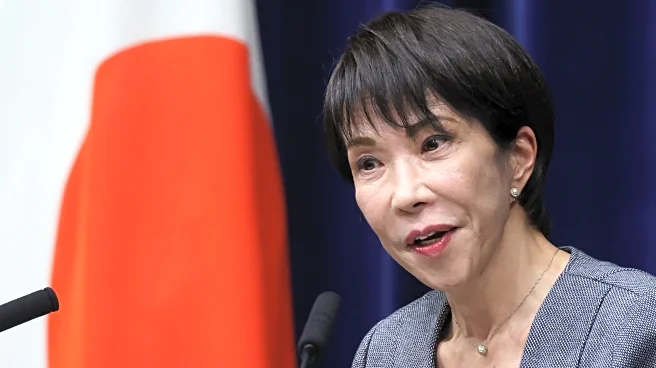
The Bank of Japan (BOJ) has decided to keep its key policy rate at 0.75% as the country prepares for an upcoming election. Prime Minister Sanae Takaichi, who supports monetary easing and fiscal support, will face voters for the first time. The decision
comes as Japan's 40-year government bond yield has recently hit a record high, while shorter maturity yields have also seen fluctuations. BOJ Governor Kazuo Ueda emphasized the need for more time to assess the impact of past interest-rate hikes, noting that financial conditions remain accommodative. The yen experienced volatility against the U.S. dollar following the announcement.
Why It's Important?
The BOJ's decision to maintain interest rates reflects its cautious approach amid economic uncertainties and political considerations. By holding rates steady, the BOJ aims to support economic stability while monitoring the effects of previous policy changes. This decision has implications for Japan's financial markets, influencing bond yields and currency valuations. The upcoming election adds a layer of complexity, as political outcomes could impact future monetary and fiscal policies. The BOJ's actions are closely watched by global investors, given Japan's significant role in international financial markets.
What's Next?
As Japan approaches its election, the BOJ will continue to evaluate economic conditions and the effectiveness of its monetary policy. The central bank's future decisions will likely be influenced by economic data, including inflation trends and wage negotiations. Market participants will also be attentive to any policy shifts following the election, as new leadership could bring changes to Japan's economic strategy. The BOJ's ability to navigate these challenges will be crucial in maintaining economic stability and fostering growth.