






What's Happening?
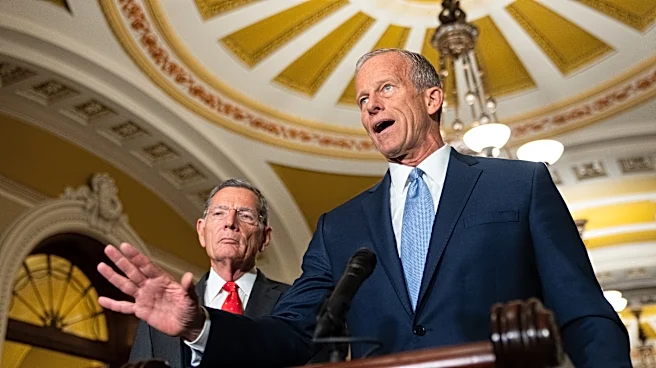
Senate Majority Leader John Thune faced a significant challenge in securing votes for President Trump's 'One Big Beautiful Bill,' a comprehensive legislative package including tax cuts and spending reductions. The bill, which required a simple majority
under budget reconciliation rules, faced opposition from key Republican senators, including Susan Collins, Rand Paul, and Thom Tillis, primarily due to concerns over Medicaid cuts and debt ceiling provisions. The decisive vote came down to Senator Lisa Murkowski, known for her independent stance, who had previously opposed Trump's initiatives. Despite intense negotiations and concessions, including clean energy tax credits and Medicaid adjustments, Murkowski's support was uncertain until the final hours. The bill eventually passed with Vice President JD Vance casting the tiebreaking vote, allowing it to move to the House, where it faced further challenges before being signed into law by President Trump on July 4.
Why It's Important?
The passage of the 'One Big Beautiful Bill' underscores the complexities of legislative negotiations within a divided party. The bill's success highlights the strategic use of budget reconciliation to bypass the filibuster, a tactic increasingly employed by both parties to advance significant legislation without bipartisan support. The concessions made to secure Murkowski's vote reflect the influence of swing votes in closely divided chambers and the necessity of addressing diverse regional concerns within national policy. The bill's passage also illustrates the ongoing tension between traditional fiscal conservatism and the broader economic agenda championed by President Trump, which includes substantial tax cuts and spending increases. This legislative victory for Trump may bolster his administration's economic policy goals but also sets a precedent for future legislative strategies in a polarized political environment.
What's Next?
Following the bill's passage, attention shifts to its implementation and the potential political fallout. The concessions made to secure votes, particularly those related to Medicaid and clean energy, may face scrutiny from both fiscal conservatives and progressive critics. Additionally, the bill's impact on the national debt and economic inequality could become focal points in upcoming elections. The Republican Party may need to navigate internal divisions as it seeks to maintain legislative momentum and address the concerns of constituents affected by the bill's provisions. The success of this legislative effort may also influence future strategies for passing contentious bills, particularly in the context of upcoming midterm elections and the broader political landscape.