




What's Happening?
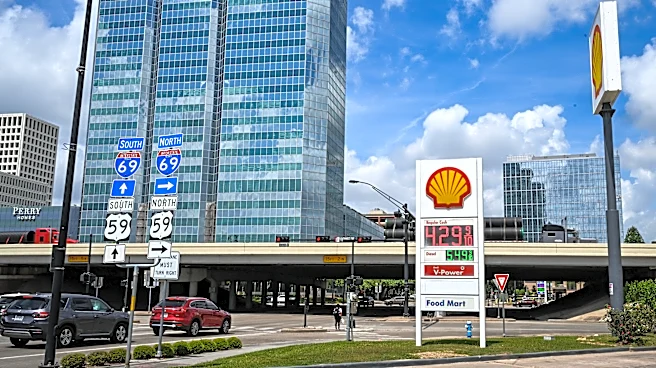
As Memorial Day approaches, gasoline prices in the U.S. have reached a four-year high, with the national average at $4.55 per gallon. In California, prices exceed $6 per gallon, leading to a public dispute between Governor Gavin Newsom and Chevron. The
oil company has blamed state policies for the high prices, while Newsom encourages residents to seek cheaper options at unbranded stations. The ongoing tensions between Chevron and California have been exacerbated by Chevron's relocation of its headquarters out of the state in 2024 and its continued use of an offshore pipeline that California has attempted to shut down.
Why It's Important?
The high gasoline prices are straining household budgets and could influence consumer behavior, potentially increasing interest in electric vehicles (EVs) and alternative transportation methods. The dispute between Chevron and California highlights the broader challenges of balancing energy policies with economic impacts. As consumers seek cost-saving measures, there may be a shift towards more fuel-efficient vehicles or public transportation, impacting the automotive and energy sectors. The situation underscores the complexities of energy policy and its effects on both the economy and the environment.
What's Next?
If gasoline prices remain high, there could be increased pressure on policymakers to address energy costs and explore alternative energy sources. The automotive industry may see a rise in demand for EVs, prompting manufacturers to accelerate production and innovation. Public transportation systems could experience increased ridership, necessitating infrastructure improvements. The ongoing dispute between Chevron and California may lead to further regulatory actions or negotiations to address the underlying issues.