



What's Happening?
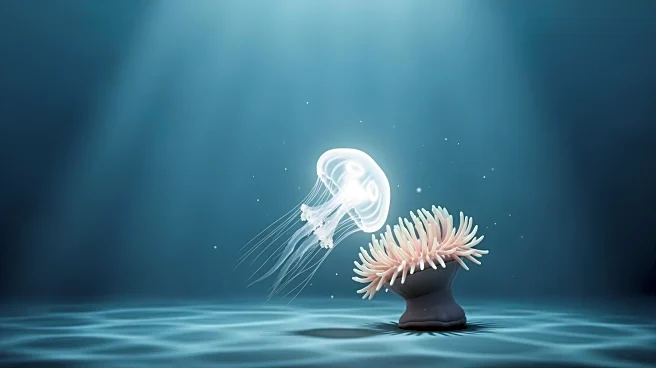
A study published in Nature Communications reveals that jellyfish and sea anemones, despite lacking brains, exhibit sleep patterns similar to humans. The research, conducted by a team including Lior Appelbaum from Bar-Ilan University, found that the upside-down
jellyfish and the starlet sea anemone both enter sleep-like states. This discovery supports the theory that sleep evolved to protect DNA in nerve cells, suggesting that sleep may have originated with the evolution of neurons.
Why It's Important?
The study's findings provide new insights into the evolutionary origins of sleep, suggesting that it may have developed as a protective mechanism for neurons. This research could have implications for understanding sleep's fundamental biological functions and its role in maintaining neural health. By expanding the list of species known to sleep, the study contributes to the broader understanding of sleep's evolutionary history and its significance across different organisms.