
What's Happening?
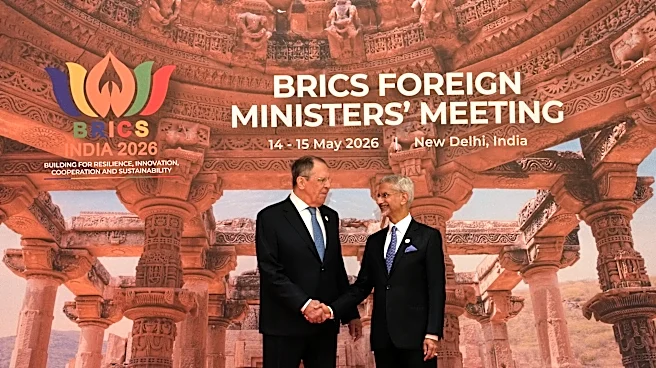
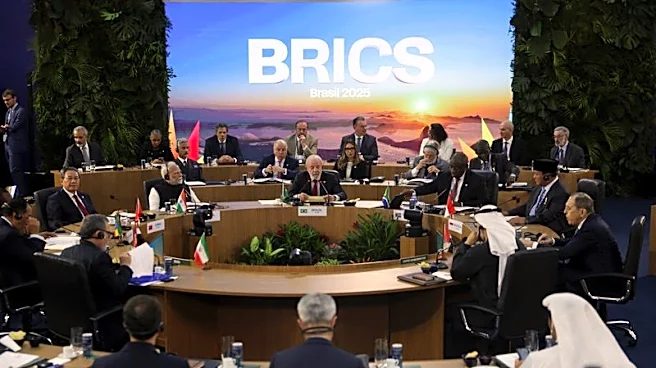
The BRICS foreign ministers' meeting in New Delhi ended without a joint statement due to differing views on the Middle East conflict. The meeting, which included representatives from Brazil, Russia, India,
China, South Africa, and new members like Iran and the UAE, highlighted divisions within the bloc. Iranian Foreign Minister Abbas Araghchi called for condemnation of US and Israeli actions, while the UAE opposed such language. The lack of consensus reflects the challenges BRICS faces in maintaining unity while expanding its influence.
Why It's Important?
The failure to issue a joint statement on the Middle East conflict underscores the geopolitical complexities within BRICS, a bloc that aims to represent the Global South. The divisions, particularly between Iran and the UAE, highlight the difficulties in achieving a unified stance on international issues. The ongoing conflict in the Middle East has significant implications for global energy markets and international diplomacy, affecting BRICS members' economic and strategic interests.
What's Next?
The upcoming BRICS leaders' summit in September may provide another opportunity to address these divisions. The ongoing conflict and the lack of consensus could lead to further diplomatic efforts by individual BRICS members to mediate or influence the situation. The bloc's ability to present a unified front on global issues will be tested as it seeks to expand its role on the world stage.