




What's Happening?
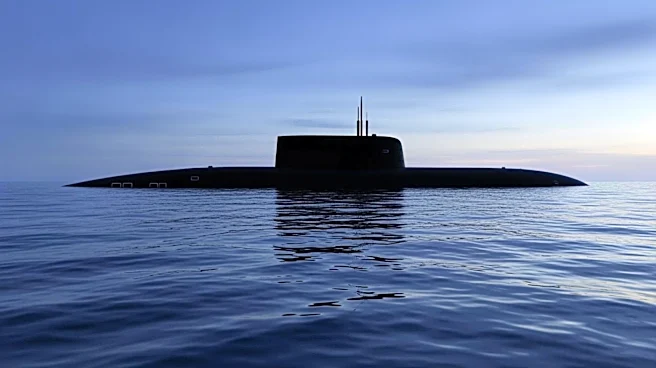
The U.S. Navy is currently facing a significant strategic challenge due to a shortage of Seawolf-class submarines. As of April 2026, only one Seawolf-class submarine, the USS Jimmy Carter, is operational. This submarine, however, is not optimized for
the primary mission of the Seawolf-class, which is to hunt other submarines in the western Pacific. The USS Connecticut, another Seawolf-class submarine, has been in dry dock for repairs since 2021 and is expected to return to service in late 2026. Meanwhile, the USS Seawolf is undergoing a major maintenance period that will keep it out of service until 2029. The Seawolf-class was originally designed during the Cold War to counter Soviet submarines, but the program was cut short after the collapse of the Soviet Union, leaving the U.S. with only three of the planned 29 submarines.
Why It's Important?
The shortage of Seawolf-class submarines has significant implications for U.S. naval strategy, particularly in the Pacific region where tensions with China are rising. The Seawolf-class submarines are considered some of the most capable in the world, designed to operate quietly and effectively in deep waters. Their absence leaves a gap in the U.S. Navy's ability to counter advanced submarines from peer adversaries like China and Russia. The Virginia-class submarines, which were designed as a more affordable alternative, do not match the Seawolf's capabilities in terms of speed, depth, and armament. This strategic shortfall could impact the U.S. Navy's ability to maintain undersea dominance, especially in a potential conflict involving Taiwan.
What's Next?
The U.S. Navy is planning to develop a next-generation attack submarine, the SSN(X), to regain some of the high-end capabilities of the Seawolf-class. However, production of the SSN(X) has been delayed to the early 2040s, which may not align with the current strategic needs. In the meantime, the Navy must rely on its existing fleet, including the Virginia-class submarines, to fill the gap. The situation underscores the need for strategic foresight in military planning, as the current shortage is a result of decisions made decades ago. The Navy will need to balance its current operational requirements with long-term strategic planning to address the evolving threats in the Pacific region.