






What's Happening?
Police from multiple agencies, including the Gardiner Police Department and the Lisbon Police Department, executed a search warrant at New England Vending in Lisbon, Maine, on a Monday morning. The operation was conducted in conjunction with the State
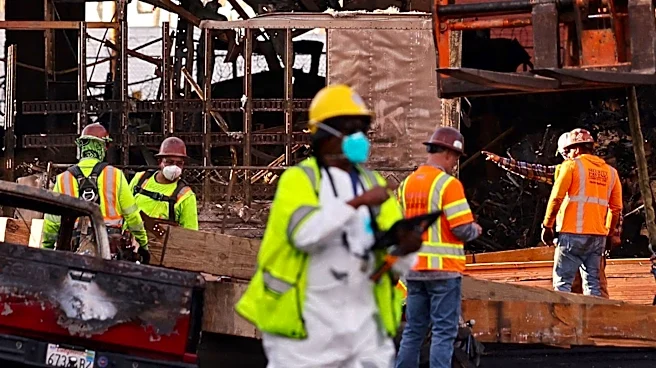
of Maine Gambling Control Office. Gardiner Police Chief Todd Pilsbury confirmed that the search was part of an ongoing investigation and assured the public that there was no immediate danger. Pilsbury did not provide further details regarding the nature of the investigation or the specific connection between the Lisbon facility and Gardiner. At the scene, a Maine's Total Coverage crew observed a forklift moving pallets of boxes, some marked 'Red Bull' and 'TGI Fridays, snacks,' which were being loaded into a truck. Yellow police tape was also seen blocking part of the driveway. New England Vending, according to its website, is a second-generation family-owned business that has been providing vending services, micro markets, office coffee, games and amusement, ATMs, and digital jukeboxes to central and southern Maine since 1988.
Why It's Important?
The execution of a search warrant by law enforcement and the State of Maine Gambling Control Office at a long-standing local business like New England Vending signals a potentially significant legal or regulatory issue. While the specific details of the investigation remain undisclosed, the involvement of the Gambling Control Office suggests that the inquiry may pertain to the legality or compliance of the company's gaming or amusement operations. This could have implications for the business's future operations, its reputation, and potentially the broader vending and amusement industry in Maine. For the community of Lisbon and central/southern Maine, where New England Vending has been a presence for decades, such an investigation can raise concerns about local business practices and regulatory oversight. The lack of immediate public threat, as stated by Chief Pilsbury, indicates that the investigation is likely focused on specific alleged violations rather than an imminent danger to the public.
What's Next?
The investigation into New England Vending is ongoing, and further details are expected to emerge as law enforcement and the Gambling Control Office continue their work. The execution of a search warrant typically precedes potential charges or regulatory actions, depending on the evidence uncovered. The company may face legal proceedings, fines, or changes to its operating licenses if violations are found. The public will likely await official statements from the Gardiner Police Department or the State of Maine Gambling Control Office for clarification on the nature of the alleged offenses. The outcome of this investigation could also lead to increased scrutiny of other businesses in the vending and amusement sector in Maine, potentially prompting broader regulatory reviews or enforcement actions to ensure compliance with state gambling laws. The business's long history in the community suggests that any findings could have a notable impact on local commerce and employment.
Beyond the Headlines
This incident, while seemingly localized, touches upon the complex regulatory landscape surrounding gambling and amusement operations, particularly as technology blurs the lines between traditional vending and gaming. The involvement of a state gambling control unit suggests a focus on compliance with specific laws designed to prevent illegal gambling, protect consumers, and ensure fair play. For a family-owned business with a long history, such an investigation can be particularly damaging, regardless of the outcome, due to the reputational impact. It also highlights the challenges faced by businesses that operate in regulated sectors, where adherence to evolving laws and strict oversight is paramount. The case could serve as a reminder to other businesses in similar industries to regularly review their compliance practices and ensure they are operating within legal boundaries, especially as state regulations on gaming and amusement continue to adapt to new technologies and market trends. The broader implications involve the balance between fostering local business and enforcing state-level regulatory frameworks.