





What's Happening?
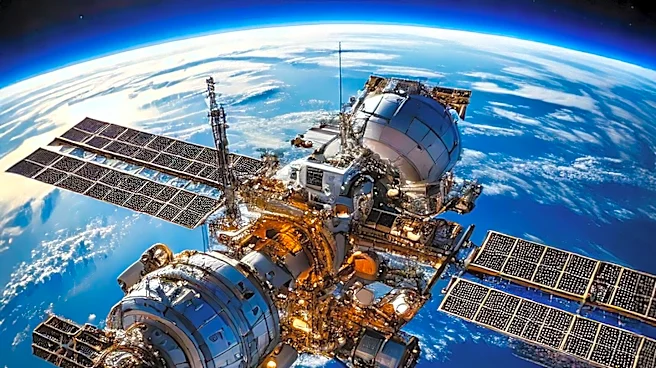
NASA has introduced a new research opportunity under its ROSES-2025 program, focusing on the Biosphere. This initiative aims to enhance understanding of terrestrial and aquatic ecosystems, their biogeochemistry, and biodiversity. The program will leverage
satellite data, field studies, and modeling to study changes in ecosystems due to natural and human-induced factors. The research will cover four main areas: Biological Diversity, Land Cover and Land Use Change, Ocean Biology and Biogeochemistry, and Terrestrial Ecology. Proposals for this program are due in two stages, with the first deadline on September 4, 2026, and the second on November 6, 2026.
Why It's Important?
This research is vital for understanding the complex interactions within Earth's ecosystems and how they are affected by climate change and human activities. By providing foundational knowledge, the program aims to inform conservation efforts and policy decisions related to biodiversity and natural resource management. The use of satellite data allows for a comprehensive, global perspective on ecosystem changes, which is essential for addressing environmental challenges at a large scale. The findings could lead to improved strategies for preserving biodiversity and managing land and water resources sustainably.
What's Next?
Researchers interested in participating in the program will need to submit proposals by the specified deadlines. The selected projects will undergo a dual anonymous peer review process to ensure scientific rigor and relevance. As the research progresses, findings will be shared with the scientific community and policymakers to guide future conservation and management efforts. The program's success will depend on the collaboration between NASA, academic institutions, and other research organizations.