


What's Happening?
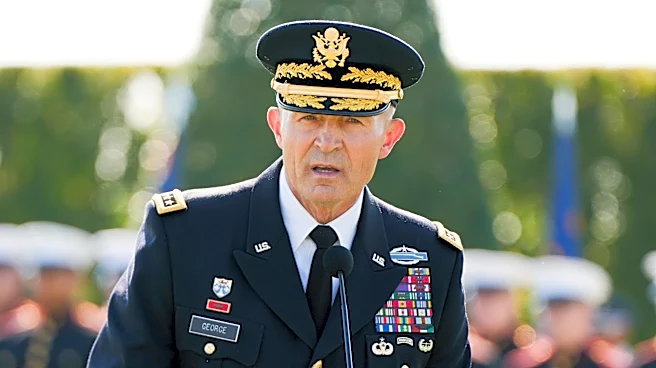
Defense Secretary Pete Hegseth has requested the resignation of Gen. Randy George, the Army's top uniformed officer, as the United States continues its military engagement with Iran. This move is part of a broader pattern of leadership changes initiated
by Hegseth, who has overseen the removal of more than a dozen senior military officials since assuming office. Gen. George, a West Point graduate and veteran of the Gulf War, Iraq, and Afghanistan, has been serving as the Army chief of staff since August 2023. His departure follows a series of high-profile dismissals, including those of Adm. Lisa Franchetti and Gen. Jim Silfe, as well as the firing of Gen. Charles 'C.Q.' Brown by President Trump. The Pentagon has confirmed that Gen. George has been asked to retire early, marking another significant shift in military leadership during a critical period of conflict.
Why It's Important?
The removal of Gen. Randy George underscores the ongoing reshuffling of military leadership under Defense Secretary Hegseth, which could have significant implications for U.S. military strategy and morale. As the U.S. engages in a complex conflict with Iran, the stability and continuity of military leadership are crucial for effective operations and strategic planning. The frequent changes in top military positions may impact the decision-making process and the execution of military objectives. Additionally, these leadership changes could affect the perception of U.S. military strength and resolve both domestically and internationally. The broader implications for U.S. defense policy and its approach to international conflicts remain to be seen, as the military navigates these leadership transitions during a time of heightened geopolitical tension.
What's Next?
With Gen. George's departure, the Pentagon will need to appoint a new Army chief of staff, a decision that will be closely watched by military and political observers. The selection of a successor will likely reflect the administration's strategic priorities and approach to the ongoing conflict with Iran. Additionally, the broader implications of these leadership changes may prompt discussions within Congress and among military stakeholders about the direction of U.S. defense policy. The response from military personnel and veterans' groups could also influence public opinion and policy decisions. As the situation with Iran evolves, the new leadership will face the challenge of maintaining operational effectiveness and morale within the Army.