
What's Happening?
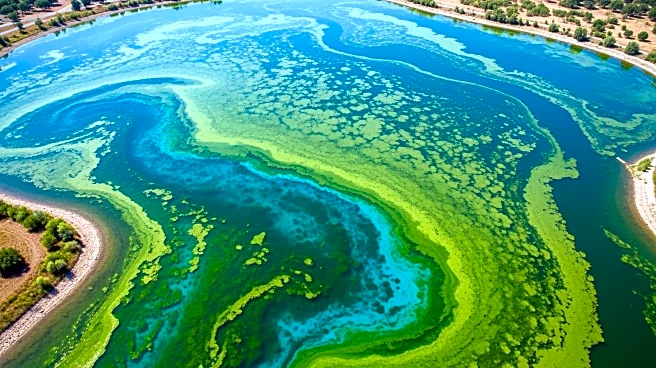
NASA's Earth Observatory has been monitoring algae blooms in the Hartbeespoort Dam reservoir in South Africa using satellite imagery from June 2022 to July 2023. These blooms, visible as vivid green patches
in the water, are caused by an overabundance of nutrients, often from agricultural runoff, leading to rapid algae growth. This phenomenon, known as eutrophication, can result in harmful algal blooms (HABs) that threaten water quality and ecosystems. The blooms can deplete oxygen levels in the water, causing hypoxia and creating 'dead zones' where aquatic life cannot survive. The Hartbeespoort Dam, located near Pretoria, is frequently affected by these blooms, which have been linked to fish kills and increased water treatment costs.
Why It's Important?
The monitoring of algae blooms by NASA underscores the broader environmental challenges posed by nutrient pollution and climate change. Harmful algal blooms can have significant economic and health impacts, affecting water availability and quality, increasing treatment costs, and posing risks to human and animal health. The situation at Hartbeespoort Dam serves as a case study for similar issues worldwide, where agricultural practices and climate conditions contribute to water quality degradation. Understanding and mitigating these impacts is crucial for sustainable water management and protecting ecosystems.
What's Next?
NASA's continued use of satellite technology, including upcoming missions like the PACE (Plankton, Aerosol, Cloud, ocean Ecosystem) mission, will enhance the ability to monitor and understand harmful algal blooms. These efforts will provide valuable data for managing water resources and developing strategies to mitigate the effects of nutrient pollution. Collaboration between scientists and local authorities will be essential to address the root causes of eutrophication and improve water quality in affected regions.
Beyond the Headlines
The issue of harmful algal blooms extends beyond environmental science, touching on ethical and policy considerations. The need for sustainable agricultural practices and effective water management policies is critical to prevent nutrient runoff and protect water bodies. Additionally, public awareness and education about the causes and consequences of algal blooms can drive community engagement and support for environmental initiatives.