







What's Happening?
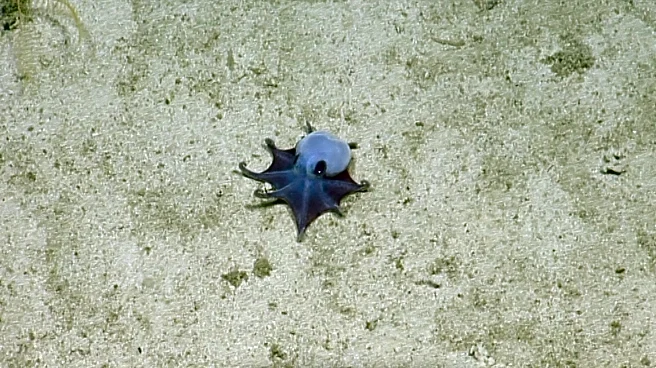
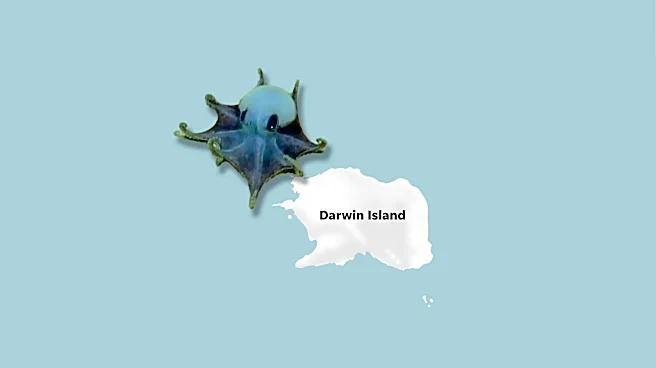
Scientists have identified a new species of octopus, Microeledone galapagensis, discovered in the Galápagos Islands. The tiny, blue octopus was found nearly 6,000 feet below the ocean surface and resembles a plush toy. The discovery was made by a team
aboard the E/V Nautilus in collaboration with the Charles Darwin Foundation and the Galápagos National Park Directorate. The octopus was studied using CT scanning technology at the Field Museum in Chicago, allowing researchers to examine its anatomy without damaging the delicate specimen. This discovery adds to the understanding of deep-sea biodiversity and the evolutionary history of octopuses.
Why It's Important?
The discovery of Microeledone galapagensis underscores the rich biodiversity of the Galápagos Islands and the deep sea. It highlights the importance of exploring and understanding these ecosystems, which are home to many unique species. The findings contribute to the broader knowledge of octopus evolution and the ecological roles these creatures play in their environments. As climate change impacts deep-sea ecosystems, understanding the biodiversity and adaptive strategies of species like M. galapagensis becomes crucial for conservation efforts. This discovery also emphasizes the need for continued exploration and documentation of the deep sea, which remains largely unexplored.
What's Next?
Researchers will likely continue to study the newly discovered octopus to learn more about its behavior, ecology, and evolutionary history. Further exploration of the Galápagos and other deep-sea environments may lead to the discovery of additional new species, enhancing our understanding of marine biodiversity. Conservation efforts may be bolstered by these findings, as they highlight the importance of protecting unique ecosystems from the impacts of climate change and human activity. The scientific community will continue to monitor and document changes in deep-sea biodiversity, contributing to global efforts to preserve marine life.
Beyond the Headlines
The discovery of M. galapagensis raises questions about the interconnectedness of marine ecosystems and the evolutionary pathways of deep-sea species. It highlights the role of taxonomists in documenting biodiversity and the challenges they face in studying rare and delicate specimens. The use of advanced technologies like CT scanning in taxonomy represents a significant advancement in the field, allowing for non-invasive study of specimens. This discovery also serves as a reminder of the vast unknowns in the deep sea and the potential for future discoveries that could reshape our understanding of marine life.