







What's Happening?
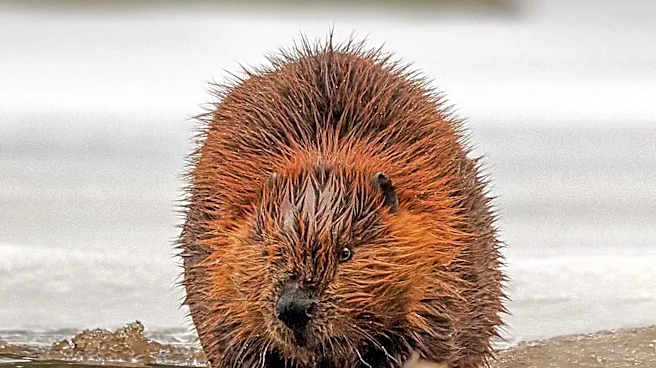
Beaver populations are making a significant comeback in several U.S. National Forests, playing a crucial role in shaping ecosystems and water management. In Alaska's Chugach National Forest, particularly on the Copper River Delta, beaver ponds are prevalent,
creating deep, quiet pools that support young coho salmon. These ponds serve as nurseries where salmon grow and overwinter before migrating to sea, with adult salmon enriching the ponds with eggs and carcasses upon their return. Similarly, the Tongass National Forest, also in Alaska, is abundant with beaver ponds, with a live camera at the Mendenhall Glacier Visitor Center allowing global viewers to observe beavers. In Washington's Okanogan-Wenatchee National Forest, beavers are being intentionally reintroduced to restore streams that dried up after beavers were trapped out in the 19th century. The Methow Valley Beaver Project, a collaboration involving the Forest Service, has relocated over 300 nuisance beavers to high-elevation streams to help store water from snowmelt, benefiting salmon, steelhead, and bull trout. In contrast, Wisconsin's Chequamegon-Nicolet National Forest manages beaver populations by removing them from certain trout streams where their dams can warm and silt up the water, demonstrating a balanced approach to wildlife management.
Why It's Important?
The resurgence and management of beaver populations in U.S. National Forests have significant implications for environmental health and resource management. Beavers are recognized as 'ecosystem engineers' due to their ability to create wetlands, which are vital for biodiversity, water storage, and flood control. Their dams slow down spring snowmelt, allowing water to infiltrate the ground and sustain stream flows later into the summer, which is critical for fish species like salmon and trout. This natural water management system can mitigate the effects of drought and improve water quality. The varying approaches to beaver management across different national forests highlight the complex balance between conservation goals, such as protecting endangered fish species, and the ecological benefits provided by beavers. These efforts demonstrate how federal agencies are adapting their strategies to leverage natural processes for ecosystem restoration and resilience, impacting local economies dependent on fishing and outdoor recreation.
What's Next?
Future efforts will likely involve continued monitoring of beaver populations and their ecological impacts in national forests. The success of projects like the Methow Valley Beaver Project may lead to the expansion of beaver reintroduction programs in other regions facing water scarcity or habitat degradation. Research will continue to refine management strategies, balancing the benefits of beaver activity with potential negative impacts on specific species or habitats, such as cold-water trout streams. Collaboration between federal agencies, state wildlife departments, and local conservation groups will be crucial for effective beaver management. Public education, such as the live camera at Mendenhall Glacier, will also play a role in raising awareness about the ecological importance of beavers and fostering support for conservation initiatives. The ongoing adaptation of management practices will be essential to maintain healthy and resilient forest ecosystems across the U.S.
Beyond the Headlines
The story of beaver reintroduction and management in U.S. National Forests reflects a broader shift in conservation philosophy, moving towards 'rewilding' and recognizing the role of keystone species in ecosystem restoration. Historically, beavers were nearly eradicated due to fur trapping, leading to significant ecological changes, including altered hydrology and reduced wetland habitats. Their comeback signifies a potential for natural solutions to environmental challenges like climate change and water resource management. The differing management approaches in various forests—welcoming beavers in some areas while removing them from others—underscore the nuanced and often site-specific nature of ecological management. This highlights the ethical considerations involved in human intervention in natural processes and the ongoing debate about how best to balance human interests with ecological integrity. The beaver's role as an 'ecosystem engineer' serves as a powerful reminder of the interconnectedness of species and their environment.