








What's Happening?
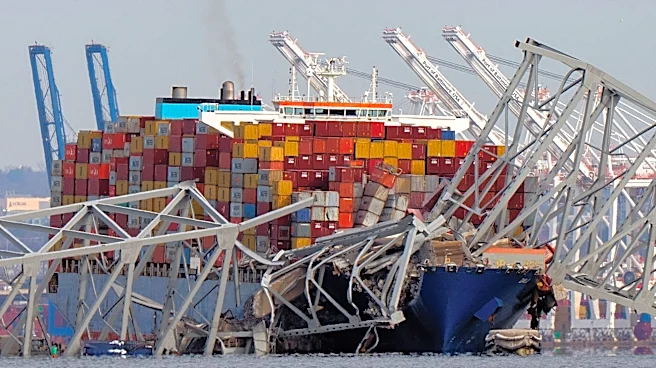
The Justice Department has filed criminal charges against Synergy Marine Pte Ltd., a Singapore-based shipping company, and its subsidiaries, following the 2024 collapse of Baltimore's Francis Scott Key Bridge. The charges include conspiracy, misconduct,
and violations of safety regulations, stemming from the crash of the Dali cargo ship into the bridge, which resulted in the deaths of six construction workers. The indictment alleges that the company failed to maintain proper systems aboard the ship, leading to a power blackout and subsequent crash. The investigation revealed that the company falsified safety records and misled investigators.
Why It's Important?
The charges against Synergy Marine highlight significant safety and regulatory compliance issues within the global shipping industry. The incident underscores the potential consequences of neglecting safety protocols, which can lead to catastrophic infrastructure damage and loss of life. The case also emphasizes the importance of rigorous oversight and accountability for shipping companies operating in U.S. waters. The financial and legal repercussions for Synergy Marine could serve as a deterrent for other companies, prompting industry-wide improvements in safety standards and practices.
What's Next?
The legal proceedings against Synergy Marine will likely involve extensive litigation, with potential settlements or penalties impacting the company's operations. The case may prompt regulatory bodies to review and tighten safety regulations for shipping companies. Additionally, the reconstruction of the Francis Scott Key Bridge, estimated to cost between $4.3 billion and $5.2 billion, will continue, with completion expected by 2030. The incident may also lead to increased scrutiny of other infrastructure projects to prevent similar disasters.
Beyond the Headlines
The collapse of the Francis Scott Key Bridge has broader implications for infrastructure resilience and safety in the U.S. The incident highlights the need for comprehensive vulnerability assessments and emergency protocols to protect critical infrastructure from similar threats. It also raises questions about the environmental impact of such disasters, as the collapse affected the Patapsco River and surrounding areas. The case may influence future policy discussions on infrastructure investment and maintenance, emphasizing the importance of proactive measures to safeguard public safety and economic stability.