
What's Happening?
The Federal Aviation Administration (FAA) issued a rare nationwide ground stop for all flights on Friday afternoon, citing "extraordinary circumstances" and "reasons of safety." This action was taken due
to a significant communication issue impacting all Air Route Traffic Control Centers. Sean Duffy, the Secretary of Transportation, confirmed the outage and stated that FAA technicians are investigating the problem. The advisory instructed all departing traffic to remain ground stopped until further notice, while inbound international flights would be managed on a case-by-case basis. Shortly after the advisory, an FAA website that lists air traffic control system notices also experienced an outage, further complicating the situation. This incident marks only the third nationwide ground stop in recent history, with previous occurrences on September 11, 2001, and January 11, 2023.
Why It's Important?
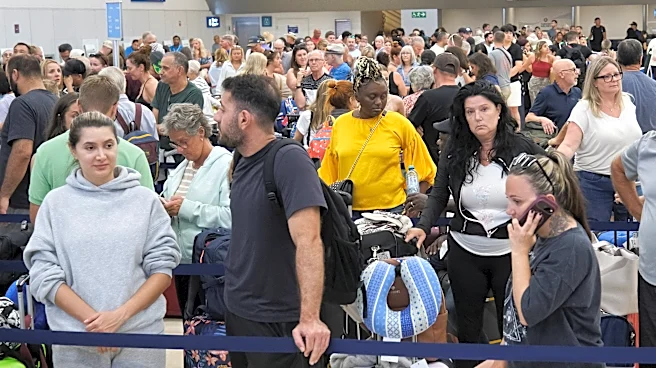
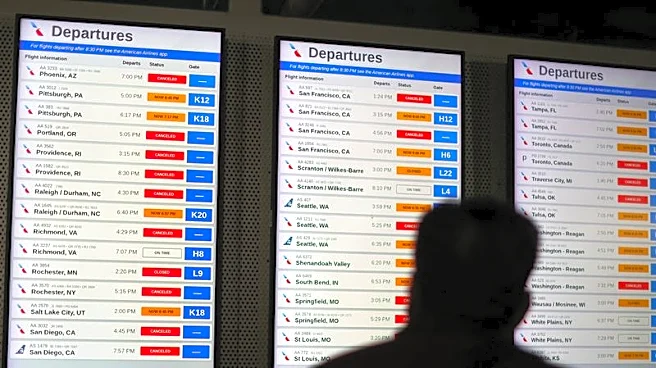
A nationwide ground stop has significant implications for air travel, causing widespread delays and cancellations that affect millions of passengers and the U.S. economy. Such an event disrupts supply chains, business travel, and personal plans, leading to substantial financial losses for airlines and related industries. The rarity of this measure underscores the severity of the communication issue within the air traffic control system. The incident highlights the critical importance of robust and reliable infrastructure for national air travel. The fact that a similar ground stop occurred in January 2023 due to a system outage raises concerns about the resilience and modernization of the FAA's technology. This event could prompt renewed scrutiny and calls for increased investment in upgrading the nation's air traffic control systems to prevent future disruptions and ensure the safety and efficiency of air travel.
What's Next?
Following the ground stop, the FAA will conduct a thorough investigation into the root cause of the communication issue. Secretary of Transportation Sean Duffy indicated that new technology upgrades might have overloaded the existing, antiquated system. This suggests that significant investments in infrastructure and communication networks for air traffic control may be necessary. Lawmakers and industry stakeholders are likely to demand answers and accountability, potentially leading to congressional hearings and policy discussions on modernizing the FAA's systems. The incident will also prompt airlines to reassess their contingency plans for such widespread disruptions. Passengers affected by cancellations are entitled to refunds, and the event will likely lead to a surge in rebooking efforts and customer service inquiries for airlines.
Beyond the Headlines
The nationwide ground stop exposes a deeper vulnerability within the U.S. air travel infrastructure, particularly concerning the reliance on aging technology. While initial reports indicated no signs of a cyberattack, the possibility was not ruled out, raising questions about cybersecurity measures for critical national systems. The incident also brings to light the broader challenge of maintaining and upgrading complex, interconnected systems that are vital for national operations. The economic impact extends beyond immediate travel disruptions, potentially affecting tourism, trade, and the overall perception of U.S. infrastructure reliability. This event could serve as a catalyst for a comprehensive review of the FAA's technological capabilities and a push for long-term strategic investments to ensure the future resilience and safety of air travel in the United States.