



What's Happening?
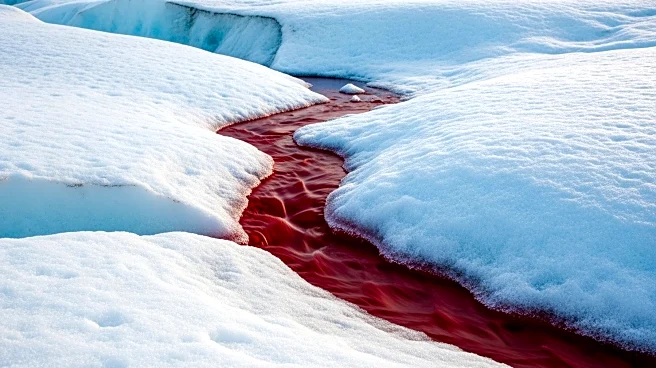
Blood Falls, a striking red stream flowing from Antarctica's Taylor Glacier, has puzzled scientists since its discovery in 1911. Recent studies have revealed that the phenomenon is caused by a subglacial reservoir of ancient saltwater, rich in iron, which
oxidizes upon exposure to air, creating the red hue. This water supports a unique ecosystem of microbes that survive without sunlight, relying on chemical reactions for energy. The discovery challenges previous assumptions about life in extreme environments and suggests potential for similar ecosystems on other planets.
Why It's Important?
The findings at Blood Falls have significant implications for astrobiology, expanding the understanding of where life can exist. The ability of microbes to thrive in such harsh conditions suggests that life could potentially exist on other celestial bodies with similar environments, such as Mars or Europa. This discovery also highlights the dynamic nature of glaciers, which can harbor complex systems beneath their surfaces. The research at Blood Falls underscores the importance of continued exploration and study of Earth's extreme environments to gain insights into the potential for life beyond our planet.