




What's Happening?
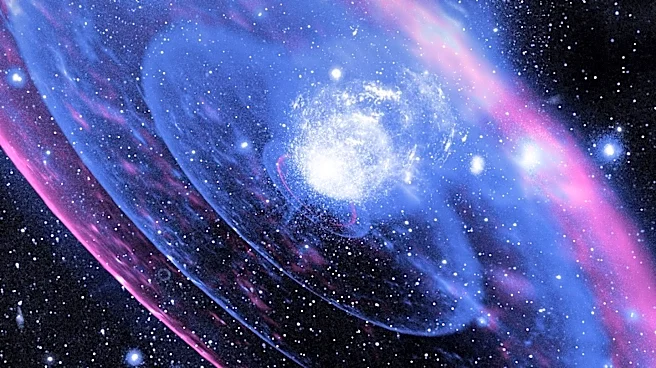
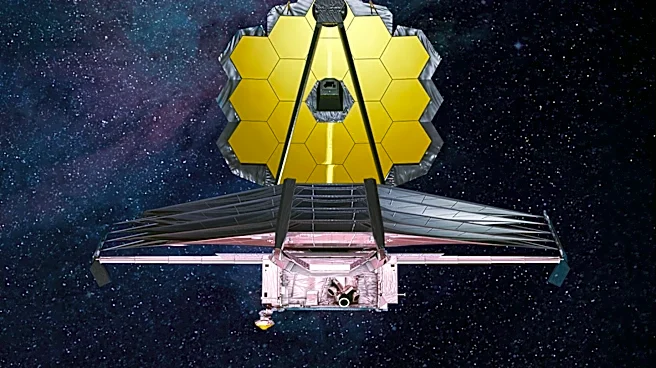
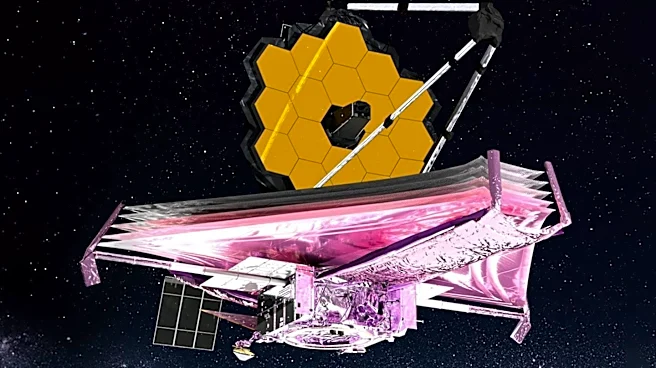
Scientists are utilizing advanced telescope data and computational methods to re-evaluate long-held theories concerning cosmic expansion and evolution. This effort is revealing a more intricate understanding of the universe. Modern astronomy employs instruments
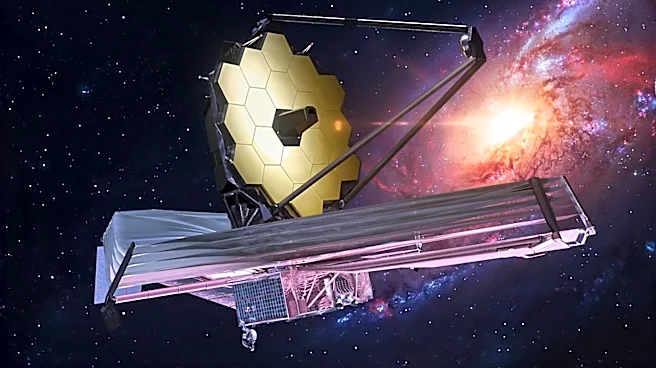
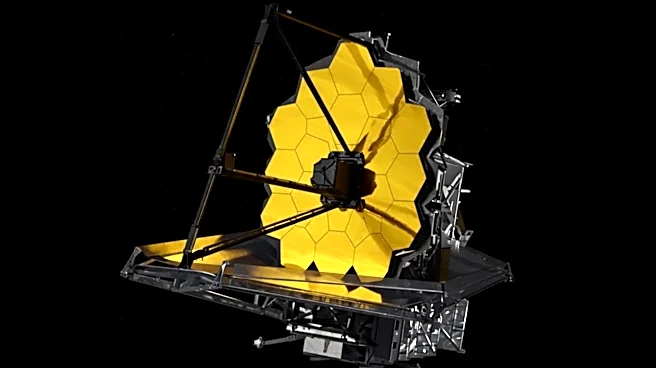
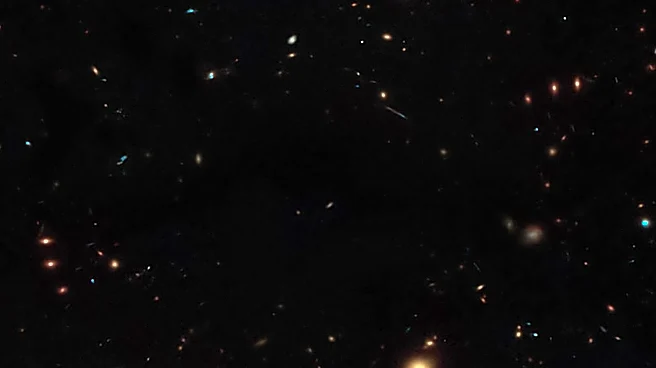
capable of capturing photons from billions of years ago, providing insights into the early universe's temperature, galaxy distribution, and spacetime. Space-based observatories like the James Webb Space Telescope and the Planck satellite offer unobstructed views, while ground-based telescopes such as the Vera C. Rubin Observatory use adaptive optics to overcome atmospheric distortion. These initiatives generate petabytes of data, transforming cosmology from individual observation to a coordinated international effort. The standard cosmological model, Lambda Cold Dark Matter (ΛCDM), which has accurately described the universe for decades, is now facing inconsistencies. One significant issue is the 'Hubble tension,' a discrepancy between the cosmic expansion rate measured from the early universe and that derived from nearby supernovae. This mismatch suggests the possibility of new physics, such as exotic dark energy forms or unexpected particle interactions. Other anomalies include the alignment of galaxy spins on large scales and the apparent underdensity of our local region, known as the Local Void.
Why It's Important?
The ongoing re-evaluation of cosmological models holds profound implications for our fundamental understanding of the universe. If the discrepancies observed, particularly the Hubble tension, cannot be resolved within the existing ΛCDM model, it could necessitate a paradigm shift in theoretical physics. This could lead to the discovery of new particles, forces, or properties of dark energy and dark matter that are currently unknown. Such discoveries would not only reshape astrophysics but could also influence other areas of physics, potentially leading to new technological advancements or a deeper understanding of fundamental forces. The massive scale of data collection and analysis also highlights the increasing reliance on advanced computational science and artificial intelligence in scientific discovery. This interdisciplinary approach, combining physics, computer science, and statistics, is crucial for extracting meaningful insights from complex datasets. The challenges to established models underscore the dynamic nature of scientific inquiry, where new observations continually refine and sometimes overturn previous understandings, pushing the boundaries of human knowledge.
What's Next?
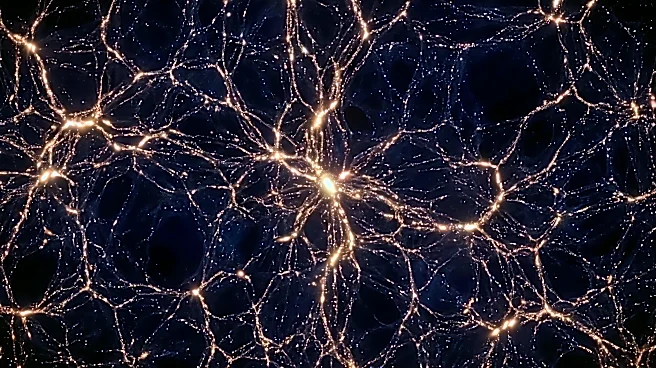
The coming decade is expected to bring an influx of new data from upcoming space missions, ground-based surveys, and particle detectors. This wealth of information will be critical in either resolving the current cosmological tensions or further solidifying the need for new theoretical frameworks. Researchers will continue to run complex simulations to test various hypotheses about galaxy formation, dark matter clumping, and gravitational behavior over cosmic distances, comparing these simulations with real observational data. The field of cosmology will likely become even more interdisciplinary, with increased collaboration among physicists, computer scientists, and statisticians to develop novel methods for data analysis and visualization. Public engagement and education will also play a vital role in sustaining support for these large-scale scientific endeavors, with citizen science projects allowing the public to contribute to cosmological research. The ongoing quest to understand the cosmos will continue to evolve as new tools and knowledge become available, potentially leading to further revisions of our understanding of the universe.
Beyond the Headlines
The current challenges to the standard cosmological model extend beyond mere scientific debate; they touch upon the philosophical underpinnings of our understanding of reality. The potential for 'new physics' implies that our current theoretical framework, while remarkably successful, may be incomplete. This could lead to a re-examination of fundamental constants, the nature of space-time, and the very origins of the universe. Ethically, the pursuit of such knowledge raises questions about resource allocation for large-scale scientific projects and the responsibility of scientists to communicate complex findings to the public. Culturally, a significant shift in our cosmic understanding could influence art, literature, and societal perspectives on humanity's place in the universe, much like previous scientific revolutions. The continuous refinement of cosmological models also highlights the iterative and self-correcting nature of the scientific method, demonstrating how empirical evidence drives progress and challenges established paradigms, fostering a deeper appreciation for the unknown and the ongoing human quest for knowledge.