





What's Happening?
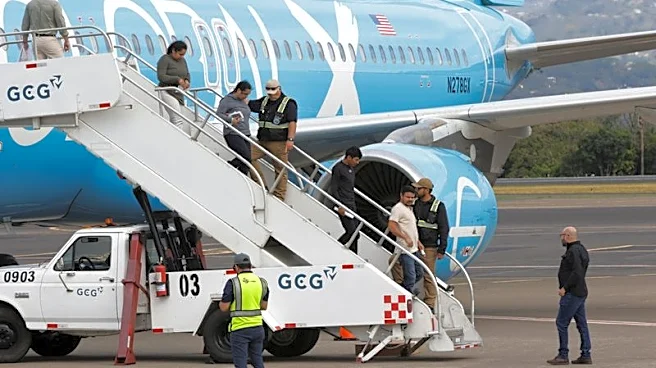
The Trump administration's stringent immigration policies have significantly contributed to a growing worker shortage in the United States. In 2025, nearly 3 million individuals left the U.S., with 2.2 million self-deporting and 675,000 being removed
by law enforcement. These individuals were primarily economic migrants rather than criminals. The administration has also implemented measures to restrict legal immigration, including pausing green card issuance for 75 countries and increasing fees for H-1B visas. This has led to a decline in applications and exacerbated labor shortages in various sectors, including technology and hospitality.
Why It's Important?
The worker shortage has far-reaching implications for the U.S. economy, affecting industries that rely heavily on immigrant labor. The hospitality and restaurant sectors are struggling to maintain service quality, while the tech industry faces challenges in meeting the demands of the artificial intelligence revolution. The shortage of skilled and unskilled labor could hinder economic growth and innovation. The situation highlights the need for a balanced immigration policy that addresses security concerns while supporting economic needs.
What's Next?
The administration has taken steps to mitigate the impact by increasing the number of visas for temporary nonagricultural workers. However, long-term solutions require comprehensive immigration reform that balances security with economic demands. Policymakers and industry leaders may need to collaborate on strategies to attract and retain a diverse workforce to sustain economic growth.