




What's Happening?
Dairyland Power Cooperative, based in Wisconsin, has signed a letter of intent with Applied Atomics Inc. to evaluate the deployment of small modular reactors (SMRs) at its Genoa site in southwest Wisconsin. This initiative is part of Dairyland's strategy
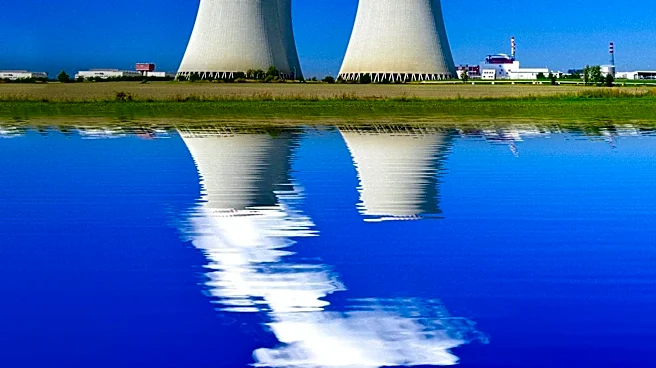
to diversify its energy portfolio and integrate a baseload, zero-carbon energy source. The Genoa site previously hosted a nuclear plant, which has since been decommissioned, but still retains a federally licensed spent fuel storage installation. Applied Atomics' SMR design utilizes Generation III+ light-water reactor technology, which runs on low-enriched uranium, similar to most commercial light-water nuclear plants. Dairyland President and CEO Brent Ridge stated that this agreement allows them to closely examine Applied Atomics' technology and its potential to complement their evolving generation portfolio.
Why It's Important?
This exploration by Dairyland Power Cooperative highlights a growing interest in SMRs as a viable solution for utilities seeking to achieve lower-carbon energy goals while maintaining grid reliability. SMRs offer several advantages, including their smaller scale (100-150 MW), which makes them suitable for cooperatives that may not require the output of traditional large nuclear plants. They can also provide load-following support for renewable energy sources, addressing intermittency challenges. Grover Hettel, Dairyland's Executive Vice President and Chief Nuclear Officer, emphasized that any investment in SMR capacity must be beneficial for both the cooperative and its members, and that the project must be cost-competitive. The potential for federal loans and grants, along with tax incentives, underscores the national push for advanced nuclear technologies.
What's Next?
Dairyland and Applied Atomics plan to conduct a feasibility study for building one or more SMRs at the Genoa site, followed by a more formal site characterization study. After these evaluations, Dairyland will assess its financial options for pursuing an SMR power purchase agreement, including potential federal funding. Hettel anticipates that a determination to enter into a binding contract could be made in approximately nine months. To qualify for federal tax incentives, the project would need to come online by 2032, though Dairyland hopes for an extension of these credits. If successful, the project would not only provide carbon-free, baseload power but also benefit the Genoa community through tax revenue and job creation, supporting rural American communities.
Beyond the Headlines
The move by Dairyland Power Cooperative reflects a broader trend in the U.S. energy sector towards embracing advanced nuclear technologies, particularly SMRs, as a critical component of a diverse and resilient energy mix. This initiative could serve as a model for other electric cooperatives and utilities looking to transition away from fossil fuels while ensuring energy security. The re-purposing of a former nuclear site for SMR deployment also demonstrates a strategic approach to leveraging existing infrastructure and expertise. The emphasis on cost-competitiveness and federal incentives highlights the economic challenges and opportunities associated with deploying new nuclear technologies, suggesting that government support remains crucial for their widespread adoption. This project could also influence regulatory frameworks and public perception of nuclear energy, especially in communities with a history of nuclear operations.