









What's Happening?
The U.S. House Committee on Education and Workforce has approved a legislative package aimed at significantly reducing the responsibilities of the U.S. Department of Education. This move aligns with President Trump's agenda to return educational control
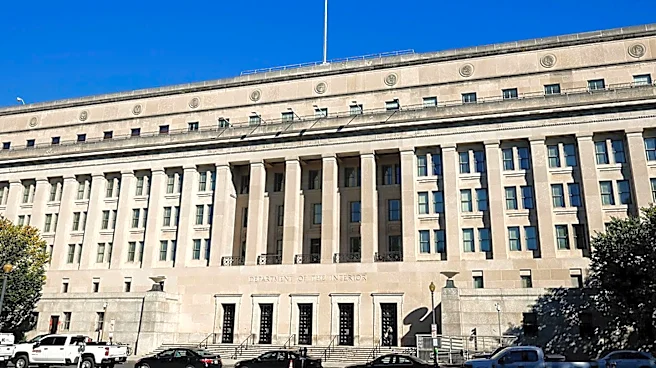
to the states. The package, consisting of 10 bills, proposes transferring several functions of the Department of Education to other federal departments. Despite passing the committee, the legislation faces challenges in the Senate, where a 60-vote majority is required to overcome a filibuster, and Republicans hold only 53 seats. The proposal has sparked debate, with Democrats criticizing it as impractical and potentially harmful to students and educators.
Why It's Important?
The proposed dismantling of the Department of Education could lead to significant changes in how education is managed in the U.S., potentially increasing state control over educational policies. This shift could result in varied educational standards across states, affecting consistency and quality. The move is part of a broader Republican effort to reduce federal oversight, which they argue will empower local communities. However, critics warn that it could lead to increased bureaucratic challenges and inefficiencies, ultimately impacting students, educators, and taxpayers.
What's Next?
The legislative package will proceed to the full U.S. House for consideration. If passed, it will face a challenging path in the Senate, where bipartisan support is necessary to advance the bills. The outcome will depend on negotiations and potential amendments to address concerns raised by opponents. Stakeholders, including educators, policymakers, and civil rights groups, are likely to continue lobbying for or against the legislation, influencing its future trajectory.