





What's Happening?
Newark Liberty International Airport (EWR) has been identified as having the third-longest average TSA security wait times in the United States, according to research published by Travel Bulletin. Travelers departing from EWR experience an average wait of
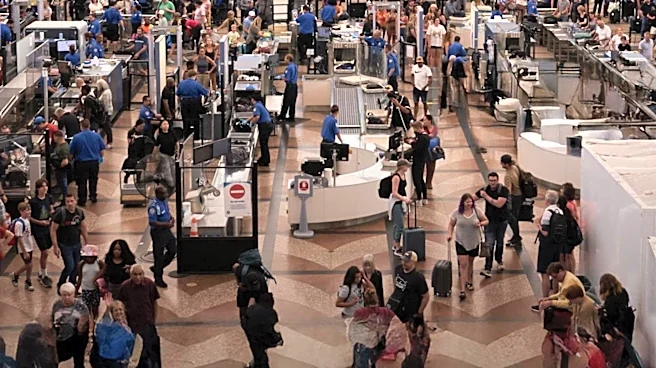
approximately 18 minutes at security checkpoints. This places Newark behind New York's John F. Kennedy International Airport (JFK), which holds the top spot with an average wait time of 23 minutes, and Chicago O'Hare International Airport (ORD), ranking second with a 20-minute average wait. The study highlights a significant issue for passengers utilizing these major U.S. airports, indicating potential delays and increased travel stress. The data compiled for this research includes information from various sources such as flight scheduling systems, airline booking systems, airports, airlines, and other third-party data providers, though it notes that the information is provided 'as is' and may not always be fully correct or up to date.
Why It's Important?
The extended TSA security wait times at major hubs like Newark Liberty International Airport have significant implications for both travelers and the broader U.S. aviation industry. For passengers, longer wait times translate to increased stress, potential missed flights, and a diminished travel experience, which can deter future air travel. For airlines, these delays can lead to operational inefficiencies, including missed connections, increased costs due to rebooking, and potential reputational damage. The ranking also underscores a challenge for airport authorities and the Transportation Security Administration (TSA) in managing passenger flow and security screening processes effectively, especially at high-volume airports. The economic impact can be substantial, affecting tourism, business travel, and the overall efficiency of the air transportation network. Furthermore, these findings could influence passenger choices, potentially leading them to opt for airports with shorter wait times, thereby shifting passenger traffic and revenue among competing facilities.
What's Next?
The identification of Newark Liberty International Airport among the top three for longest TSA security wait times may prompt various stakeholders to review and implement measures to improve efficiency. The TSA, in conjunction with airport management, could explore strategies such as optimizing staffing levels, deploying advanced screening technologies, or refining passenger flow management. Airlines might also adjust their scheduling to account for these longer wait times, advising passengers to arrive earlier for their flights. Travelers, in turn, may increasingly utilize services like TSA PreCheck or CLEAR to expedite their security process. The ongoing monitoring of these wait times by organizations like Travel Bulletin will likely continue, providing updated data that could drive further operational changes and policy adjustments aimed at enhancing the passenger experience and reducing delays at major U.S. airports.
Beyond the Headlines
Beyond the immediate inconvenience, consistently long security wait times at major U.S. airports like Newark Liberty International Airport can have deeper implications for national infrastructure and public perception. It highlights the ongoing tension between security imperatives and traveler convenience, a balance that constantly needs recalibration. The reliance on data from various sources, as mentioned in the study, also points to the complexity of accurately measuring and addressing these issues, as data discrepancies or delays in updates could hinder effective solutions. Furthermore, the stress associated with airport security can contribute to a broader sense of travel fatigue, potentially impacting the psychological well-being of frequent flyers and influencing travel patterns. This situation also raises questions about resource allocation within the TSA and whether current funding and personnel are adequate to meet the demands of increasing passenger volumes at critical transportation hubs.