



What's Happening?
The Moon Phase Calendar for October 2026 outlines the various stages of the lunar cycle, including the Last Quarter, New Moon, First Quarter, and Full Moon. The Last Quarter is scheduled for October 3 at 13:25 GMT, followed by the New Moon on October 10
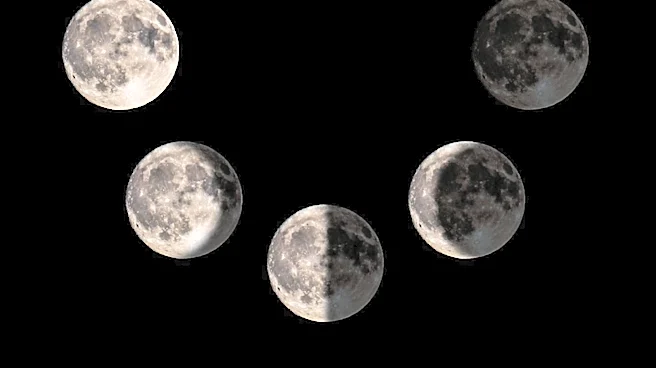
at 15:50 GMT. The First Quarter will occur on October 18 at 16:12 GMT, and the Full Moon, known as the Hunter's Moon, is set for October 26 at 04:11 GMT. The calendar also details the eight recognized Moon phases: New Moon, Waxing Crescent, First Quarter, Waxing Gibbous, Full Moon, Waning Gibbous, Last Quarter, and Waning Crescent. Each phase is characterized by the changing illumination of the lunar disk as seen from Earth, a process that takes approximately 29.5 days to complete one full cycle, also known as a synodic month or lunation. The 'Moon age' refers to the number of days since the last New Moon.
Why It's Important?
Understanding the lunar cycle is important for various reasons, including its traditional influence on agricultural practices and cultural beliefs. Historically, Full Moon names like 'Hunter's Moon' were used to mark specific times of the year, often tied to seasonal activities and natural events. While scientific evidence does not strongly support the Moon's direct impact on phenomena like hair growth or plant growth, these traditions persist, connecting people to natural rhythms. For stargazers and astronomers, knowing the Moon phases is crucial for optimal observation. The New Moon phase, for instance, provides the darkest skies, ideal for viewing faint celestial objects, while the First and Last Quarter phases offer better contrast for observing lunar surface details through telescopes due to longer shadows. The Full Moon, despite its brightness, is less ideal for detailed telescopic observation due to direct sunlight and can hinder stargazing by washing out fainter objects.
What's Next?
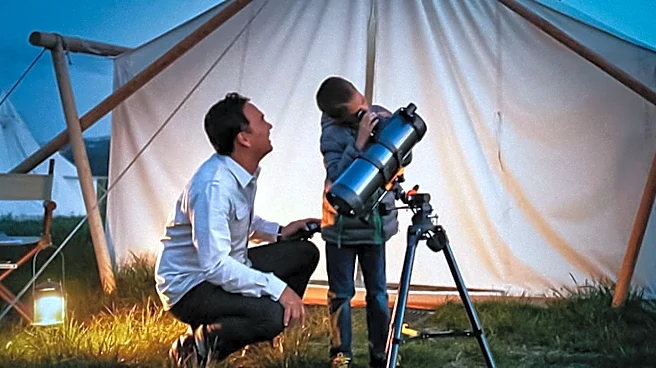
Individuals interested in observing the Moon or planning stargazing activities can utilize the provided calendar to anticipate the best viewing conditions. The 'Hunter's Moon' on October 26 will be a prominent event, and resources like the Hunter's Moon 2026 guide will offer specific times for different time zones and explanations of its significance. For those seeking precise moonrise and moonset times, as well as the Moon's position in the sky, astronomy applications are recommended. The continuous cycle of lunar phases means that these events will repeat monthly, offering ongoing opportunities for observation and engagement with traditional practices. Future calendars will continue to detail these phases, allowing for advanced planning for both casual observers and those who follow lunar-based traditions.
Beyond the Headlines
The enduring interest in Moon phases extends beyond scientific observation, touching upon cultural heritage and human connection to the cosmos. The practice of naming Full Moons, dating back centuries, highlights how ancient civilizations used celestial events to structure their lives and understand their environment. This tradition underscores a deeper human need to find meaning and order in natural phenomena. While modern science provides a detailed understanding of lunar mechanics, the cultural and traditional interpretations of Moon phases continue to resonate, influencing practices from gardening to personal care for some individuals. This blend of scientific understanding and traditional belief illustrates the multifaceted relationship humanity has with its natural satellite, reflecting both empirical knowledge and a rich tapestry of folklore and custom.