

What's Happening?
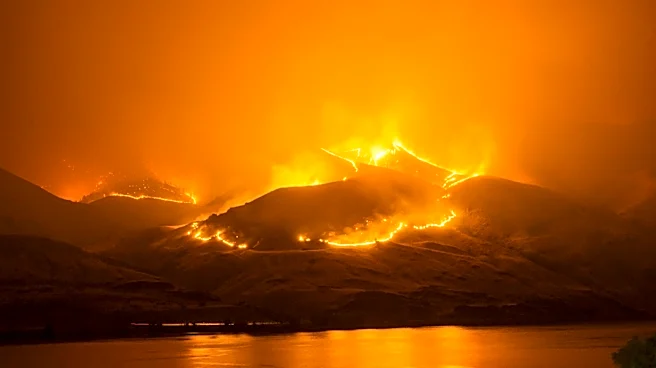
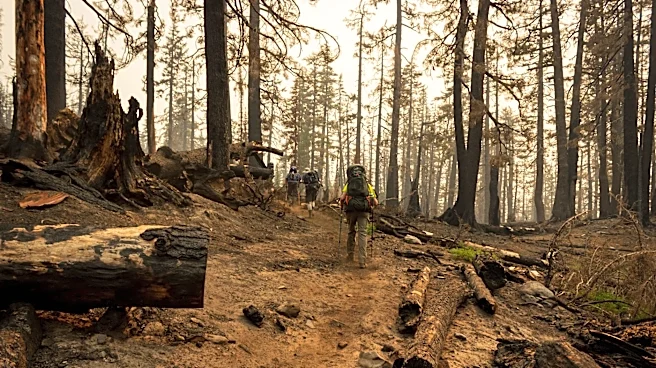
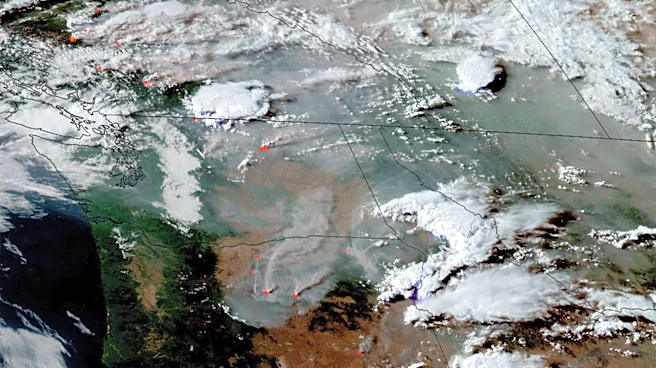
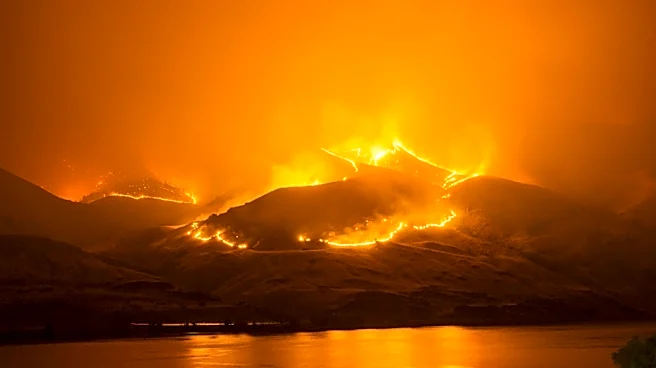
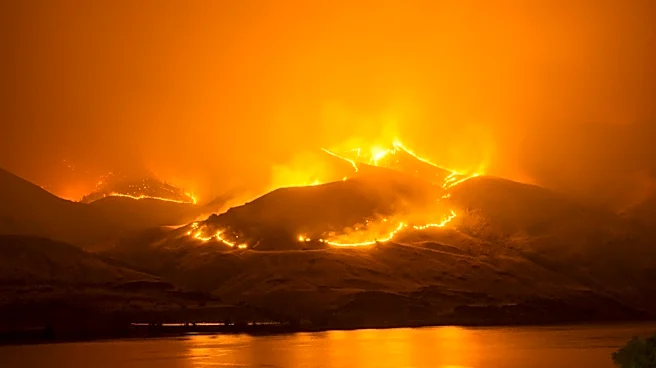
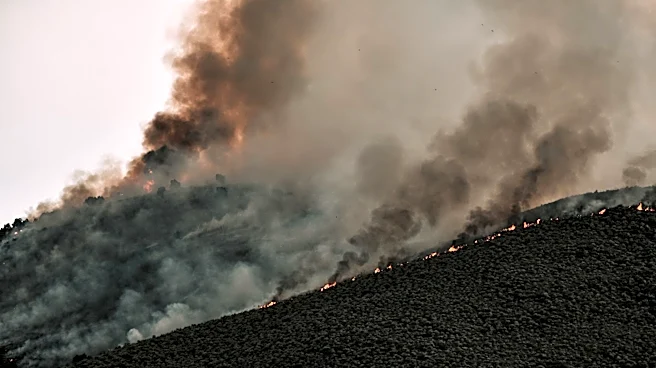
The Pacific Northwest is experiencing a record-breaking wildfire season, with over 1.6 million acres burned across the region. The fires, primarily sparked by lightning, have been exacerbated by prolonged heat, dry conditions, and gusty winds. Oregon
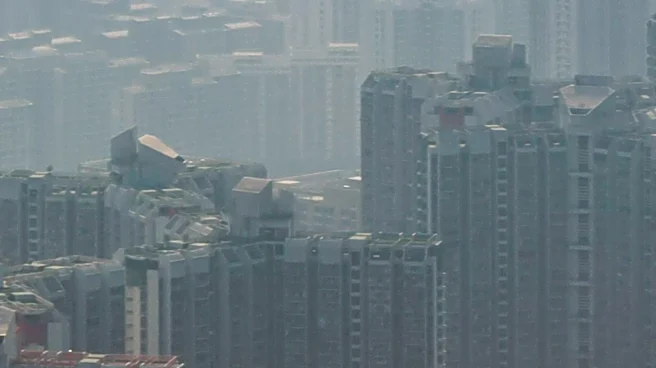
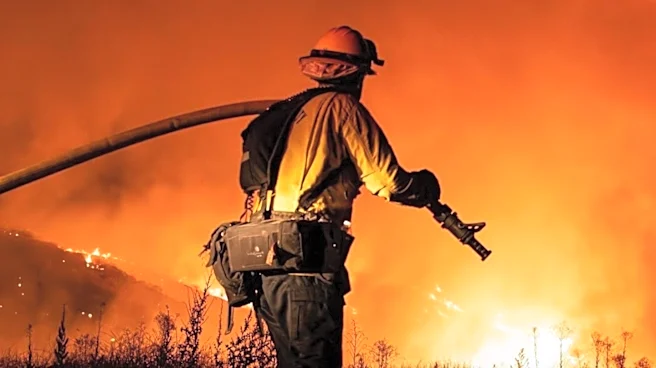
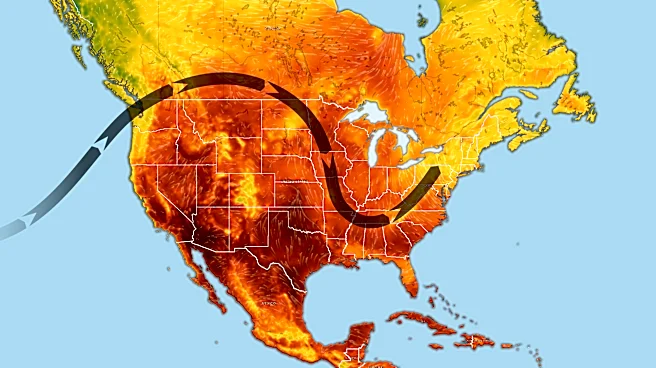
is the most affected state, with 31 of the 45 active large fires. Thousands of firefighters are deployed to combat the blazes, which have strained national resources. The fires have also led to hazardous air quality across several states, with smoke reaching as far as North Dakota. The National Interagency Fire Center has raised the preparedness level to 5, the highest on the scale, indicating severe strain on resources.
Why It's Important?
The wildfires pose significant threats to communities, infrastructure, and air quality across the U.S. The extensive smoke has degraded air quality, posing health risks to millions. The fires also threaten rural communities and critical infrastructure, necessitating large-scale evacuations and emergency responses. The strain on firefighting resources highlights the challenges of managing such widespread natural disasters, which are becoming more frequent and severe due to climate change. The economic impact is substantial, affecting agriculture, tourism, and local economies dependent on natural resources.
What's Next?
Fire Weather Watches have been issued for parts of Washington, Idaho, and Montana, indicating potential for further fire spread. Efforts to contain the fires continue, with additional resources being mobilized. The situation remains dynamic, with weather conditions playing a critical role in the fires' progression. Authorities are focused on protecting lives and property while managing the environmental and health impacts of the smoke. Long-term, the region may need to adapt to more frequent and severe fire seasons, potentially altering land management and emergency response strategies.