


What's Happening?
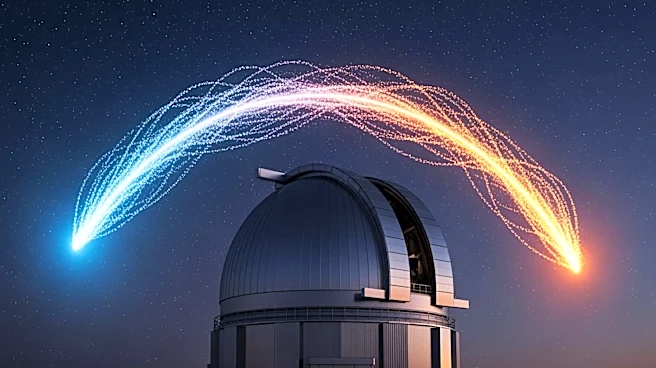
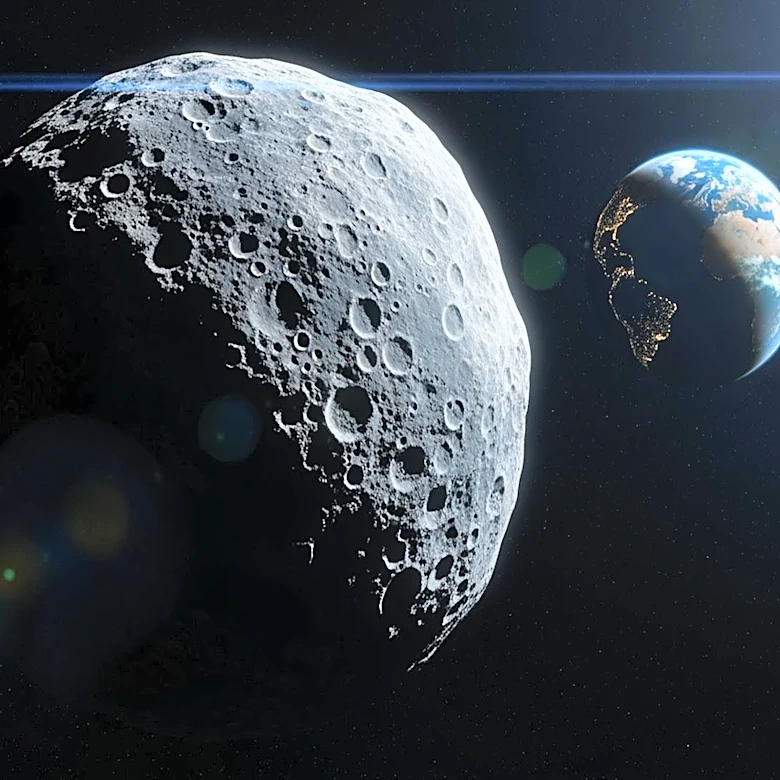
The Subaru Telescope has captured stunning images of the interstellar comet 3I/ATLAS, revealing its chemical changes as it travels through space. Unlike comets from our solar system, 3I/ATLAS originates from beyond the Sun's influence, offering a unique
opportunity to study interstellar objects. The images, taken in December 2025, show the comet's composition in unprecedented detail, providing insights into the early stages of planetary formation in distant stellar systems. The study, published in The Astronomical Journal, aims to deepen understanding of how planetesimals and planets form across various star systems.
Why It's Important?
The observation of 3I/ATLAS contributes to the growing body of knowledge about exoplanets and the processes that lead to their formation. By analyzing the chemical properties of interstellar comets, scientists can infer conditions in distant parts of the galaxy, potentially reshaping theories about planetary formation. This research may also have implications for the search for life beyond Earth, as understanding the building blocks of life in interstellar objects could suggest a wider distribution of life-supporting conditions across the universe.
What's Next?
Researchers will continue to study the data collected from 3I/ATLAS to refine models of planetary formation and explore the potential for life in other star systems. The Subaru Telescope's capabilities may be further utilized to observe similar interstellar objects, expanding the scope of research in this field. As new discoveries emerge, scientists may develop more comprehensive theories about the universe's formation and the conditions necessary for life.
Beyond the Headlines
The study of interstellar comets like 3I/ATLAS highlights the importance of advanced astronomical instruments in exploring the universe's mysteries. The Subaru Telescope's strategic location and technology enable detailed observations that can transform our understanding of cosmic phenomena. This research underscores the interconnectedness of celestial bodies and the potential for interdisciplinary collaboration in uncovering the universe's secrets.