



What's Happening?
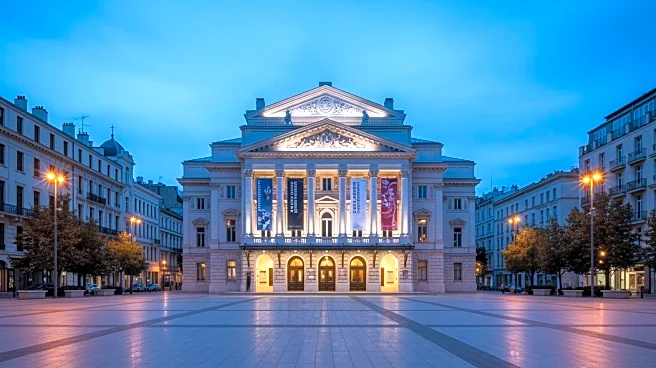
The historic theater in Mariupol, Ukraine, has reopened more than three years after being destroyed by a Russian airstrike. The attack, which occurred on March 16, 2022, resulted in the deaths of hundreds of civilians who had sought refuge in the building.
The word 'children' had been painted on the street outside the theater, visible to pilots and satellites, in an attempt to prevent the attack. Despite this, the theater was targeted, leading to significant loss of life. The rebuilt theater was inaugurated with a gala concert, attended by Russian-installed authorities, including Denis Pushilin, the head of the partially occupied Donetsk region. The reconstruction has been criticized by Mariupol's Ukrainian city council, which views it as an attempt to erase the traces of a war crime and further the Russification of the city.
Why It's Important?
The reopening of the Mariupol theater is significant as it highlights ongoing tensions and the complex dynamics in the region. The theater's destruction and subsequent rebuilding are emblematic of the broader conflict between Russia and Ukraine, particularly in areas like Donetsk, which remain contested. The event underscores the challenges of post-conflict reconstruction and the political implications of cultural restoration in occupied territories. For Ukraine, the theater's reopening is seen as a symbol of Russian aggression and an attempt to rewrite history. For Russia, it represents a consolidation of control and influence in the region. The situation continues to impact diplomatic relations and peace negotiations, with the fate of regions like Donetsk being a major point of contention.
What's Next?
The reopening of the theater may lead to increased tensions between Russia and Ukraine, as well as within the international community. Ukraine and its allies may continue to condemn the reconstruction as a violation of cultural and historical integrity. The event could also influence ongoing peace talks, as the control and future of regions like Donetsk remain unresolved. Additionally, the cultural programming at the theater, which reportedly focuses on Russian works, may further exacerbate tensions and highlight the cultural divide. The international community will likely continue to monitor the situation closely, as it has broader implications for regional stability and international law.