



What's Happening?
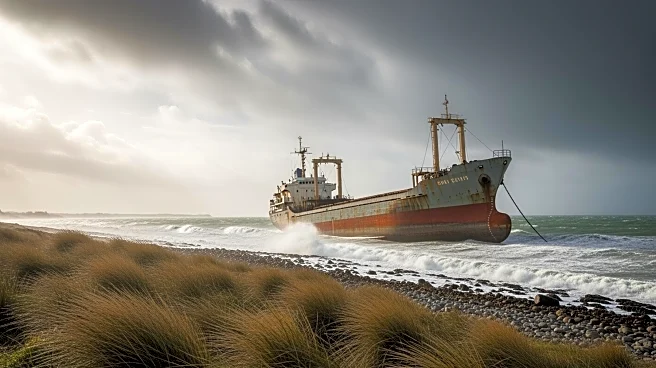
An aging freighter, the White Line, has run aground on the northern shores of the Sea of Marmara due to strong winds. The incident occurred near a tourist area known as Santos Plaji. The vessel, built in 1985 and Turkish-owned, was attempting to anchor
when it drifted and grounded. No injuries or pollution have been reported, and the ship remains aground as rough sea conditions have delayed a full inspection. The White Line has a history of port state control deficiencies, with numerous issues cited in recent years, including fire safety and engine room cleanliness. This grounding is one of several incidents in the region over the weekend, highlighting challenges in maritime safety.
Why It's Important?
The grounding of the White Line underscores ongoing concerns about maritime safety, particularly for older vessels with a history of deficiencies. This incident highlights the risks associated with operating aging ships in challenging weather conditions. The lack of immediate environmental impact is fortunate, but the situation serves as a reminder of the potential for maritime accidents to cause significant ecological damage. The event may prompt regulatory bodies to scrutinize the safety standards of similar vessels more closely, potentially leading to stricter enforcement of maritime safety regulations. Additionally, the incident could impact regional trade routes, as the Sea of Marmara is a critical passage for shipping in the area.
What's Next?
A full inspection of the White Line will be conducted once sea conditions improve, which will determine the extent of any damage and the necessary steps for refloating the vessel. Maritime authorities may increase monitoring and inspections of similar vessels to prevent future incidents. The grounding could also lead to discussions about updating safety regulations for older ships. Stakeholders, including shipping companies and regulatory agencies, will likely evaluate the incident to improve response strategies for maritime emergencies. The outcome of these evaluations could influence future policy decisions regarding maritime safety and environmental protection.