







What's Happening?
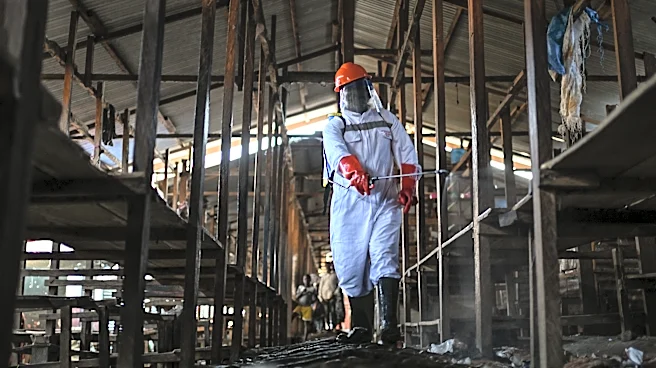
The World Health Organization (WHO) has issued a warning that the Ebola outbreak in the Democratic Republic of Congo (DRC) is advancing faster than response efforts can manage. The outbreak, caused by the rare Bundibugyo strain of Ebola, has no approved
treatment or vaccine, complicating containment efforts. WHO's director-general, Dr. Tedros Adhanom Ghebreyesus, has urged neighboring countries to take immediate action as the epidemic poses a high risk to them. The outbreak is concentrated in the Ituri and North Kivu provinces, areas plagued by insecurity and conflict, which further hampers response efforts. The situation is exacerbated by attacks on health facilities and traditional burial practices that contribute to the spread of the disease.
Why It's Important?
The rapid spread of Ebola in the DRC highlights significant challenges in global health response capabilities, particularly in regions affected by conflict and instability. The lack of an approved vaccine for the Bundibugyo strain underscores the need for accelerated research and development in infectious disease prevention. Neighboring countries are at risk, which could lead to broader regional health crises if the outbreak is not contained. The situation also raises concerns about the adequacy of international aid and support for health emergencies, as cuts in overseas aid spending may further hinder effective response efforts.
What's Next?
Immediate action from neighboring countries is crucial to prevent the spread of Ebola beyond the DRC. WHO is scaling up operations, but the insecurity in affected regions poses significant challenges. The international community may need to increase support and resources to bolster containment efforts. Continued monitoring and reporting of the outbreak's progression are essential to coordinate effective responses and prevent further escalation.