






What's Happening?
The Wikimedia Core Organizing Team has announced an art project for Wikimania 2027 in Santiago, inviting participants to contribute to a collective tapestry. The project, centered around the question 'What Internet do we want?', encourages community members
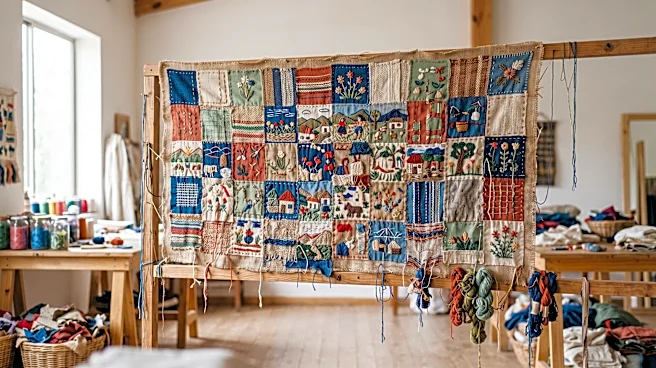
to express their ideas artistically. Individuals are asked to submit a 20cm by 20cm fabric square, with a 3cm margin on each side, which will be woven into a large patchwork art piece known as an arpillera. This Chilean traditional art form, historically used for political resistance and human rights advocacy, will serve as the medium for the collective expression. Participants can either stitch their own message or illustration onto the square or send a piece of fabric with cultural or personal meaning to be sewn by another community member. Submissions can be made at regional conferences, through workshops, by mail to Wikimedia Chile, or brought directly to Wikimania in Santiago starting August 18, 2027. Expert arpilleristas will guide the stitching process at the event.
Why It's Important?
This initiative is significant as it provides a unique, artistic platform for the global Wikimedia community to engage with the central theme of Wikimania 2027: the future of the internet. By utilizing arpilleras, the project connects contemporary digital discourse with a rich tradition of social commentary and collective expression, particularly relevant given the art form's history in Chile as a tool for political resistance. The resulting tapestry will serve as a lasting historical record, both physical and digital, capturing the diverse opinions and creativity within the Wikimedia movement. This collaborative art piece fosters community engagement and offers a tangible representation of shared aspirations for the internet, moving beyond traditional conference formats to include a more inclusive and creative form of participation. It also highlights the intersection of technology, art, and social commentary on a global scale.
What's Next?
Over the coming months, the Wikimedia community will be actively submitting their fabric squares through various channels, including regional conferences, mail, and workshops. The Wikimania Core Organizing Team will continue to provide updates on the project. As Wikimania 2027 approaches, participants attending the event in Santiago will have the opportunity to bring their squares directly and engage in the crafting space to help sew the arpillera. The final collective tapestry will be assembled during Wikimania 2027, guided by expert arpilleristas. Following the event, the completed arpillera will become a lasting historical record, with both physical and digital documentation. Participants are reminded that by contributing, they are releasing their square under a CC BY-SA 4.0 license and must ensure their squares comply with customs regulations regarding seeds or fibers.
Beyond the Headlines
The Arpilleras art project extends beyond a simple craft activity, delving into deeper implications of collective identity, digital rights, and artistic activism. By adopting a Chilean art form with a history rooted in political resistance, the project subtly imbues the discussion about 'What Internet do we want?' with themes of freedom of expression and human rights, echoing the arpilleras' original purpose during the 1970s military dictatorship. This choice highlights the potential for art to serve as a powerful medium for social and political commentary, even within a technologically focused community. Furthermore, the collaborative nature of creating a single, massive artwork from individual contributions symbolizes the decentralized and community-driven ethos of the Wikimedia movement itself. It underscores the idea that the future of the internet is a collective endeavor, shaped by diverse voices and perspectives, much like each fabric square contributes to the whole tapestry.