




What's Happening?
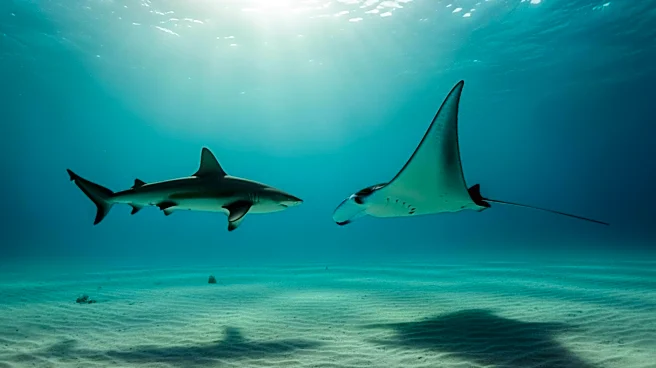
In Revillagigedo National Park, Mexico, researchers led by Dr. Madalena Mesquitela Pereira Cabral have observed Galápagos sharks engaging in a unique behavior with oceanic manta rays. Instead of the typical predatory interactions, these sharks were seen
rubbing against the manta rays, a behavior known as chafing. This interaction, documented for the first time, involves the sharks using the manta rays as a means to remove parasites from their bodies. The study recorded both adult and juvenile sharks participating in this behavior, which may offer a more effective method for parasite removal compared to traditional cleaning stations.
Why It's Important?
This discovery sheds light on the complex interactions between marine species and highlights the importance of marine protected areas like Revillagigedo National Park. Such behaviors could indicate a previously unknown symbiotic relationship, where manta rays provide a service to sharks, potentially influencing our understanding of marine ecosystems. The findings emphasize the need for continued protection and study of these environments to uncover more about the natural behaviors of marine life, which can inform conservation strategies and enhance biodiversity preservation efforts.
What's Next?
Further research is needed to understand the full implications of this behavior and its prevalence among other shark species. Scientists may explore whether similar interactions occur in other marine protected areas and how these behaviors impact the health and survival of both sharks and manta rays. The study could lead to broader investigations into the ecological roles of large marine animals and their interactions, potentially influencing future marine conservation policies.