



What's Happening?
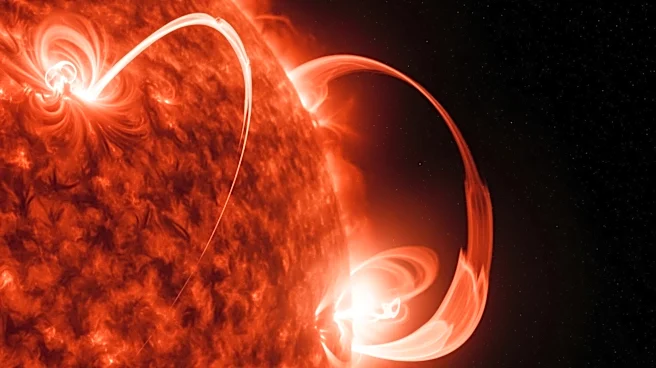
NASA's Artemis II mission, set to launch on April 1, 2026, faces potential disruption from a massive solar flare that has produced a coronal mass ejection (CME) heading towards Earth. The CME could interfere with communications, GPS, and power grids during
the launch. Despite these concerns, NASA officials have stated that they do not expect the solar flare to impact the mission and are proceeding with the launch. The Artemis II mission is the first human moon mission in over 50 years and aims to send astronauts on a 10-day journey around the moon. The mission serves as a vital test flight for future lunar landings.
Why It's Important?
The potential impact of the solar flare on the Artemis II mission underscores the challenges of space exploration, particularly the risks posed by space weather. Successful management of these risks is crucial for the safety of astronauts and the success of the mission. The Artemis II mission is a critical step in NASA's plan to return humans to the moon and establish a sustainable presence there. The mission's success could influence future space exploration strategies and the development of technologies to mitigate space weather risks.
What's Next?
NASA will continue to monitor the solar flare's impact on Earth's atmosphere and its potential effects on the Artemis II mission. The mission management team has given the go-ahead for the launch, but they will remain vigilant for any changes in space weather conditions. The astronauts aboard the mission will be prepared to take shelter in a designated area of the spacecraft if necessary. The outcome of the Artemis II mission will inform future missions, including Artemis III, which aims to land humans on the moon.