


What's Happening?
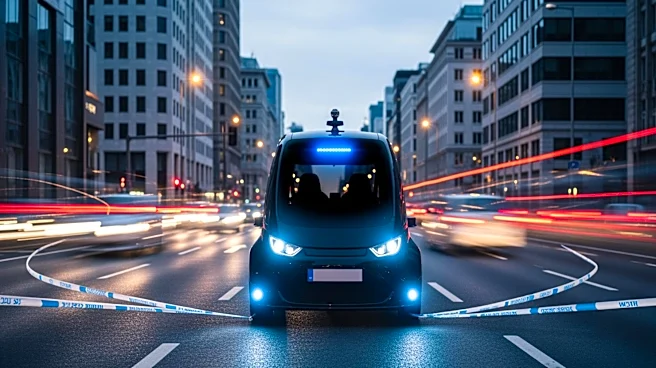
A mass outage affected more than 100 Baidu Apollo Go robotaxis in Wuhan, China, leaving passengers stranded for up to two hours. The incident, attributed to a 'system fault' by local police, resulted in vehicles stopping in traffic, causing at least three
collisions. Passengers reported issues with emergency systems, such as non-responsive SOS buttons and disconnected customer service calls. The outage has sparked widespread discussion on social media about the safety of autonomous driving technology. Baidu has not yet disclosed the cause of the outage, which remains under investigation.
Why It's Important?
This incident underscores the potential risks associated with autonomous vehicle technology, which is a rapidly growing sector in the U.S. The safety and reliability of self-driving systems are critical concerns for regulators, industry stakeholders, and the public. The outage in Wuhan highlights the need for robust emergency response systems and contingency plans to address technical failures. As the U.S. continues to advance its autonomous vehicle initiatives, this event may influence regulatory frameworks and safety standards to ensure public safety and confidence in the technology.
What's Next?
The investigation into the Baidu robotaxi outage will be closely monitored by global industry stakeholders. The findings could lead to changes in safety protocols and operational standards for autonomous vehicles in China and potentially influence international practices. Baidu's response to the incident and any measures taken to prevent future occurrences will be critical in maintaining public trust in autonomous technology. The event may also prompt U.S. companies and regulators to evaluate their own safety measures and emergency response strategies for autonomous vehicle operations.