







What's Happening?
Christopher Doucet, a 68-year-old Canadian-born lawful permanent resident, has been indicted by a federal grand jury in Missouri. The indictment charges Doucet with falsely claiming to be a U.S. citizen to register to vote. According to prosecutors, Doucet registered
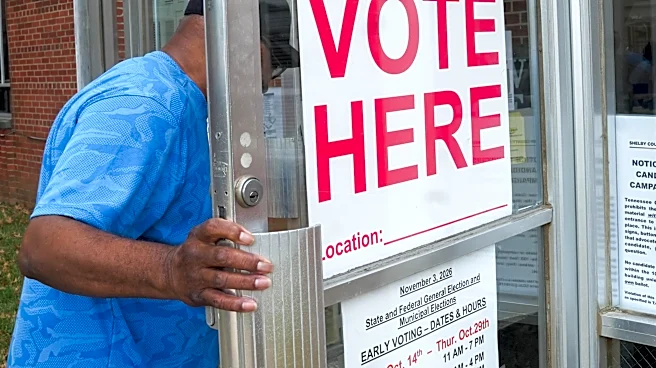
to vote in Jackson County on January 30, 2024, despite knowing he was not a U.S. citizen and was ineligible to vote. On his voter registration form, he allegedly answered 'Yes' to the question, 'Are you a citizen of the United States of America?' and signed a certification affirming his U.S. citizenship. Federal law prohibits lawful permanent residents from voting in federal elections, and Missouri law extends this prohibition to state and local elections. Prosecutors further allege that Doucet subsequently cast a ballot in the April 2, 2024, general municipal election at the Living Hope Restoration Branch polling location in Independence, Missouri. The investigation was conducted by Homeland Security Investigations.
Why It's Important?
This indictment highlights the ongoing scrutiny and legal actions surrounding voter eligibility and election integrity in the United States. The case underscores the federal government's commitment to prosecuting individuals who allegedly make false claims to participate in the electoral process. For lawful permanent residents, this case serves as a stark reminder of the legal restrictions on their participation in U.S. elections, emphasizing that such actions can lead to severe federal penalties, including imprisonment and substantial fines. The case also contributes to broader discussions about the security of voter registration systems and the mechanisms in place to verify voter eligibility, particularly concerning citizenship status. The outcome of this case could influence future enforcement efforts and public perception regarding the integrity of local and federal elections.
What's Next?
Christopher Doucet faces potential legal proceedings following his indictment. Federal prosecutors will be required to present evidence to a trial jury, which will then determine his guilt or innocence. If convicted, Doucet could face a maximum sentence of five years in federal prison and a fine of up to $250,000. These penalties represent statutory limits, and any actual sentence would be determined by the court after considering advisory federal sentencing guidelines and other legally mandated factors. The case will proceed through the federal court system, with subsequent hearings and potentially a trial to adjudicate the charges. The Department of Justice, through Special Assistant U.S. Attorney Michael J. Nichols, is prosecuting the case.
Beyond the Headlines
This case touches upon several deeper implications beyond the immediate legal proceedings. It raises questions about the effectiveness of current voter registration verification processes and whether additional safeguards are needed to prevent non-citizens from registering to vote. The incident could fuel debates among policymakers and election officials regarding the balance between voter access and election security. Furthermore, it may influence public discourse on immigration and the rights and responsibilities of non-citizens residing in the U.S. The case also highlights the role of federal agencies like Homeland Security Investigations in upholding election laws, extending their purview beyond traditional immigration enforcement to include electoral integrity. The outcome could set a precedent for how similar cases involving alleged non-citizen voting are handled in the future.