



What's Happening?
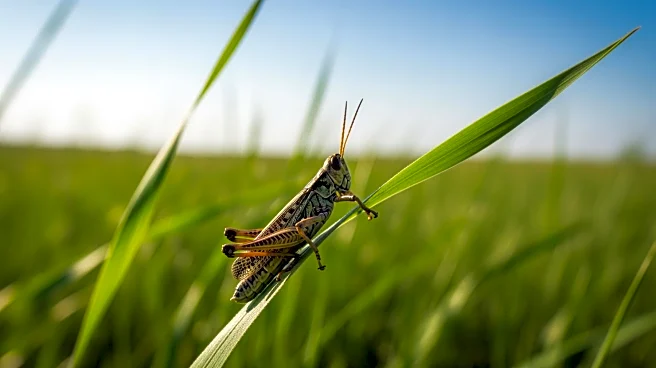
The Saskatchewan Ministry of Agriculture has released the 2025 Grasshopper Survey, revealing a reduction in grasshopper populations compared to the previous year. The survey sampled 1,149 sites across the province, indicating that while populations have
decreased, the potential for future outbreaks remains. Factors such as temperature, precipitation, and natural predators influence grasshopper populations, and a warm fall could lead to increased egg laying and earlier hatching in the spring.
Why It's Important?
Grasshopper populations can significantly impact agricultural productivity, as they are known to damage crops. Understanding population trends is crucial for farmers to implement effective pest management strategies and protect their yields. The survey provides valuable data that can inform decision-making and help mitigate the risks associated with grasshopper infestations. By monitoring these trends, farmers can better prepare for potential outbreaks and minimize economic losses.
What's Next?
Farmers are encouraged to conduct field assessments during the growing season to monitor grasshopper populations and implement control measures as needed. The Saskatchewan Ministry of Agriculture will continue to provide resources and support to help farmers manage pest populations effectively. Ongoing research and monitoring will be essential to understanding the factors influencing grasshopper populations and developing sustainable management practices.