

What's Happening?
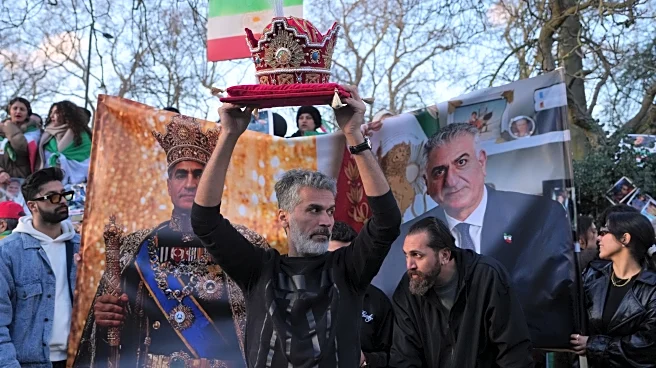
Celebrations have erupted in the United States, the UK, and Spain following the death of Iran's Supreme Leader, Ali Khamenei. The 86-year-old leader, who had ruled for three decades, was reportedly killed during a series of attacks across Iran conducted
by the United States and Israel. The strikes began on Saturday morning local time, and the news of Khamenei's death was later confirmed by Iranian state television. This development marks a significant escalation in tensions between Iran and the Western nations, particularly the United States and Israel, who have been at odds with Iran over its nuclear program and regional influence.
Why It's Important?
The death of Supreme Leader Ali Khamenei is a pivotal moment in Middle Eastern geopolitics, potentially altering the balance of power in the region. Khamenei's leadership was central to Iran's political and religious identity, and his death could lead to a power vacuum or internal strife as factions vie for control. For the United States and its allies, this event could signify a strategic victory, potentially weakening Iran's influence in the region. However, it also raises the risk of retaliation from Iran, which could destabilize the region further and impact global oil markets, given Iran's strategic position near the Strait of Hormuz, a critical chokepoint for oil shipments.
What's Next?
In the wake of Khamenei's death, the international community will be closely monitoring Iran's response. There is potential for increased military tensions or retaliatory actions by Iran against US and Israeli interests. Additionally, the succession process within Iran could lead to internal conflict or a shift in policy direction, depending on who emerges as the new leader. The United States and its allies may need to prepare for potential diplomatic or military engagements to manage the fallout and ensure regional stability.
Beyond the Headlines
The death of a long-standing leader like Khamenei could have profound cultural and religious implications within Iran. His leadership was not only political but also deeply intertwined with the religious fabric of the nation. The transition of power may lead to shifts in Iran's domestic policies, particularly regarding civil liberties and religious freedoms. Furthermore, this event could influence the broader Shia-Sunni dynamics in the Middle East, potentially affecting alliances and conflicts across the region.