






What's Happening?
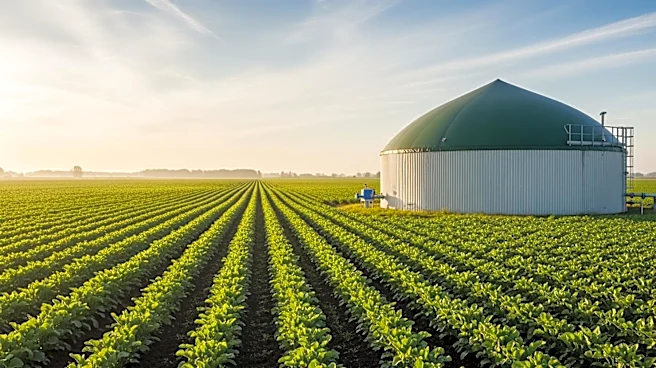
Vermont Renewable Gas (VRG) has reached an agreement with the Vermont Agency of Agriculture, Food and Markets to establish comprehensive agricultural and soil protection requirements for a proposed 2.2 MW renewable energy facility in Lyndon. This agreement,
filed with the Vermont Public Utility Commission, sets conditions for soil preservation, feedstock sourcing, and biochar quality. The project aims to avoid adverse impacts on primary agricultural soils, which are vital for food production and ecosystem stability. The agreement includes rigorous testing for contaminants in biochar and mandates transparency and accountability in operations.
Why It's Important?
The agreement is a significant step in advancing renewable energy projects in Vermont, aligning with broader environmental goals. By ensuring the protection of agricultural soils, the project supports sustainable agricultural practices and long-term food security. The focus on biochar quality and environmental controls reflects a commitment to high safety standards, which could serve as a model for similar projects. This development is crucial for stakeholders in the renewable energy sector, as it demonstrates a collaborative approach to balancing energy production with environmental preservation.
What's Next?
As the Vermont Public Utility Commission continues its review, the project will undergo further scrutiny to ensure compliance with the established conditions. The ongoing monitoring and testing requirements will play a critical role in maintaining the project's environmental integrity. Future discussions may focus on expanding renewable energy infrastructure in Vermont, potentially influencing policy decisions and investment in the sector. The project's success could encourage similar initiatives, contributing to the state's renewable energy goals and economic development.