
What's Happening?
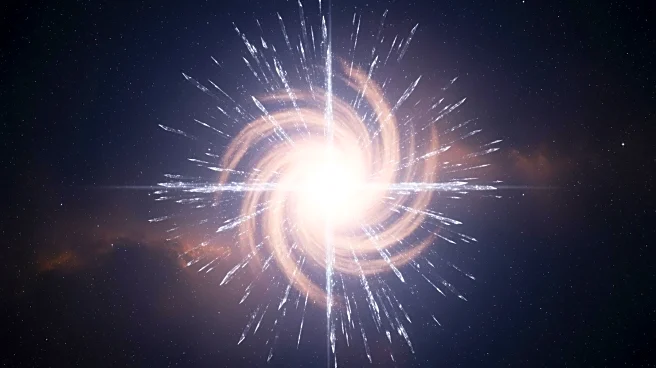
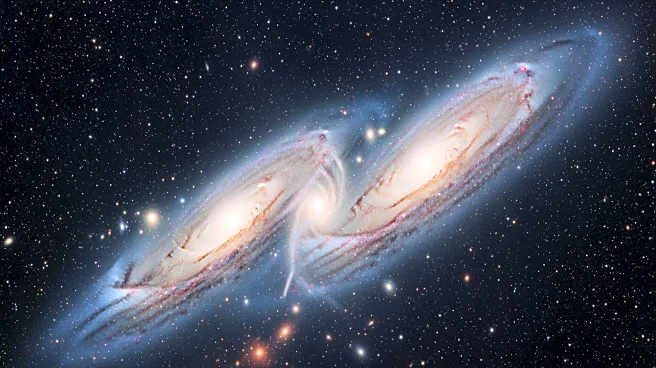
Astronomers at Texas A&M University have discovered a rare and tightly packed collision of galaxies in the early universe, using observations from the James Webb Space Telescope (JWST). This event, occurring
approximately 800 million years after the Big Bang, involves at least five galaxies merging, which is much earlier than previously expected. The discovery, published in Nature Astronomy, reveals that these galaxies are interacting within a compact region and are surrounded by a halo of oxygen-rich gas. This finding challenges existing models of early galaxy evolution, which predicted that such complex mergers and the redistribution of heavy elements like oxygen would occur over a billion years after the Big Bang.
Why It's Important?
This discovery is significant as it suggests that galaxy interactions and the enrichment of their environments with heavy elements began much earlier than current models predict. The presence of a complex, merger-driven system so early in the universe's history indicates that theories about how galaxies assemble and evolve need to be revised. The findings also help explain the presence of massive, largely inactive galaxies observed by JWST a few billion years later. If systems like this quintet merged rapidly and exhausted their gas early, they could evolve into the massive galaxies seen at later times. This challenges astronomers to rethink the timeline and processes of galaxy formation and evolution.
What's Next?
Future observations by the JWST will focus on examining the motion of gas and galaxies within this system, providing further insights into the formation of early cosmic structures. These studies will help refine models of galaxy evolution and improve our understanding of the universe's history. The ongoing research will likely influence how astronomers interpret data from other early universe observations, potentially leading to new theories about the formation and development of galaxies.