


What's Happening?
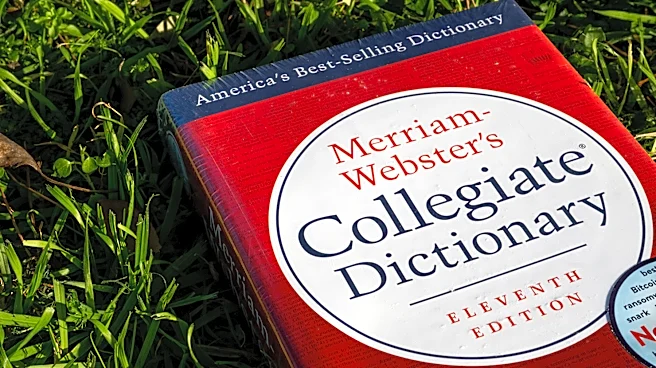
Merriam-Webster has announced the addition of 1,400 new words and definitions to its dictionary. This update reflects the evolving English language, incorporating terms that have gained frequent, widespread, and meaningful use in contemporary society.
Many of the new entries are drawn from social media culture and pop culture, indicating their significant impact on daily communication. Examples of newly added words include 'looksmaxxing,' 'parasocial,' 'Rickroll,' and 'meme coin.' Other additions, such as 'cuffing season,' which describes a period when individuals seek romantic partners, and 'crashout,' also highlight modern linguistic trends. Merriam-Webster's editorial process for selecting new words involves assessing their usage frequency, prevalence, and overall significance, ensuring that the dictionary remains a current and relevant resource for language users.
Why It's Important?
The continuous updating of the Merriam-Webster dictionary is important as it provides a linguistic snapshot of contemporary American culture and communication. The inclusion of terms originating from social media and pop culture underscores the profound influence these digital spaces have on language development and societal discourse. This trend reflects how rapidly new concepts and expressions are integrated into everyday vocabulary, often driven by online interactions and viral content. For linguists, educators, and the general public, these additions offer insights into cultural shifts, technological advancements, and evolving social norms. The dictionary's role as a record of language ensures that these new terms are formally recognized, aiding in clear communication and understanding across different generations and social groups. It also highlights the dynamic nature of language, which constantly adapts to reflect the realities of its speakers.
What's Next?
The integration of these new words into the Merriam-Webster dictionary means they will become part of the official lexicon, influencing how language is taught, used, and understood in the U.S. and beyond. Future editions and online versions of the dictionary will feature these terms, providing definitions and usage examples. This formal recognition may further legitimize their use in various contexts, from academic writing to professional communication. The ongoing process of language evolution suggests that Merriam-Webster will continue to monitor emerging words and phrases, particularly those from rapidly changing domains like technology and social media. This ensures the dictionary remains a comprehensive and up-to-date reference, reflecting the continuous innovation and adaptation of the English language.
Beyond the Headlines
The addition of social media and pop culture terms to the dictionary has deeper implications for how society values and preserves language. It raises questions about the balance between linguistic tradition and the acceptance of informal, rapidly evolving vocabulary. While some may view these additions as a dilution of formal language, they also represent the democratic nature of language, where common usage ultimately dictates what becomes part of the standard. This phenomenon reflects a broader cultural shift where digital interactions increasingly shape our collective understanding and expression. The formal inclusion of terms like 'parasocial' also highlights evolving psychological and social dynamics in the digital age, acknowledging new forms of relationships and interactions that were less prevalent in previous eras. This ongoing linguistic evolution underscores the need for adaptability in communication and education.