






What's Happening?
The U.S. military is expanding its anti-drug operations from the Taura air base in Ecuador, a move that has raised questions about its legality and local impact. According to AFP, the base, located an hour from Guayaquil, a major port for drug shipments
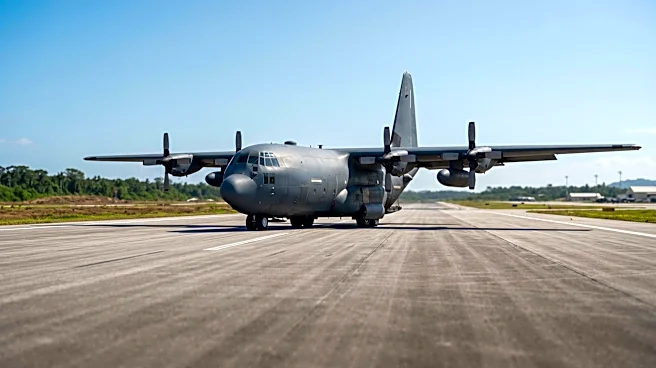
to the U.S., has seen significant construction work and an unusual deployment of resources. Flight records analyzed by AFP show repeated landings and takeoffs of U.S. military aircraft, including C-130 Hercules, C-17 Globemaster, V-22 Osprey, and Black Hawk helicopters. These flights often connect Taura with U.S. facilities like the Marine Corps Air Station Cherry Point in North Carolina and Dover Air Force Base in Delaware. Satellite imagery and witness accounts corroborate the expansion, which includes clearing vegetation around the main runway and installing numerous tents and a large, detachable hangar. President Daniel Noboa announced in September that he was working with the U.S., Brazil, and the European Union to centralize bilateral cooperation at Taura, planning to improve runways for joint operations. This expansion occurs less than a year after a referendum where Ecuadorians voted against foreign military bases, leading to internal military concerns about the legal framework for hosting foreign troops.
Why It's Important?
This expansion of U.S. military presence in Ecuador is significant for several reasons. It marks a renewed and intensified effort by the U.S. to combat drug trafficking in the Pacific, a region critical for the flow of narcotics to the U.S. The previous U.S. base in Manta, active until 2009, was a key anti-drug hub, and its closure was a point of contention. The current move to Taura, a purely military base, suggests a strategic shift to avoid the complexities of civilian-military shared facilities. For the U.S., this means a strengthened operational footprint in a critical South American country, potentially enhancing intelligence gathering and interdiction capabilities against drug cartels. However, the secrecy surrounding the expansion and the timing, shortly after a national referendum opposing foreign bases, could strain U.S.-Ecuadorian relations and fuel anti-U.S. sentiment among some segments of the Ecuadorian population. The increased military activity also raises concerns about potential human rights issues, reminiscent of past allegations during the Manta base's operation. The U.S. stands to gain a more robust platform for its anti-drug efforts, while Ecuador faces the challenge of balancing national sovereignty with international cooperation in its fight against organized crime.
What's Next?
The future of the U.S. military presence at Taura will likely involve continued development of the base infrastructure and an increase in joint operations with Ecuadorian forces. President Noboa's commitment to strengthening the base for international cooperation suggests a long-term strategy. However, the legal and political implications within Ecuador remain uncertain. The removal of the former Air Force commander, Mauricio Salazar, after he sought clarification on the legal framework for hosting foreign military personnel, indicates potential internal resistance or at least a desire for greater transparency. It is probable that civil society groups and opposition political figures will continue to scrutinize the arrangement, potentially leading to legal challenges or public protests. The U.S. will likely continue to provide military aid and training to Ecuador, as evidenced by the deployment of Black Hawk helicopters and MQ-9 Reaper drones. The effectiveness of these expanded operations in significantly curbing drug flow to the U.S. will be a key metric for evaluating the success of this strategy, and the U.S. will need to navigate the delicate balance between its security interests and respecting Ecuadorian sovereignty and public opinion.
Beyond the Headlines
The expansion of U.S. military operations in Ecuador delves into deeper implications beyond immediate anti-drug efforts. Ethically, the presence of foreign military forces, especially after a public vote against such bases, raises questions about national sovereignty and democratic principles. The secrecy surrounding the expansion, as reported by AFP, could erode public trust in both the Ecuadorian government and U.S. intentions. Legally, the lack of clear public documentation regarding the status of U.S. troops and the scope of their operations could lead to constitutional challenges within Ecuador. Culturally, the increased foreign military presence might evoke historical memories of U.S. intervention in Latin America, potentially fostering resentment or anti-imperialist sentiments. Furthermore, the focus on military solutions to drug trafficking, while addressing immediate threats, might overshadow the underlying socio-economic factors that contribute to the drug trade. The long-term shift could see Ecuador becoming a more militarized state, with potential impacts on civil liberties and the balance of power between civilian and military institutions. The U.S. approach in Ecuador could also set a precedent for its engagement with other Latin American nations grappling with similar issues, influencing regional security dynamics and international relations.