







What's Happening?
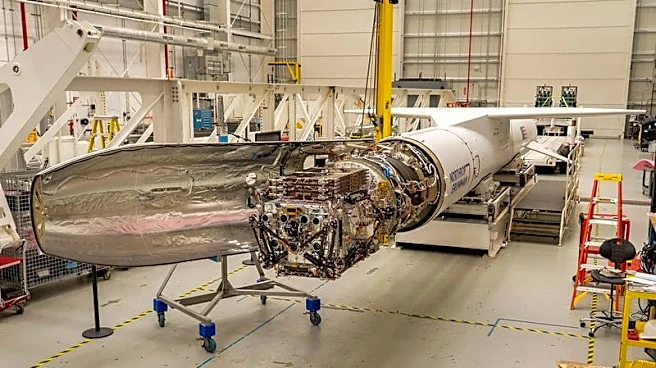
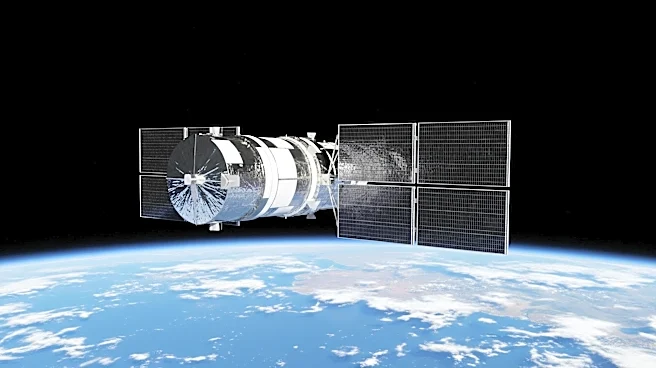
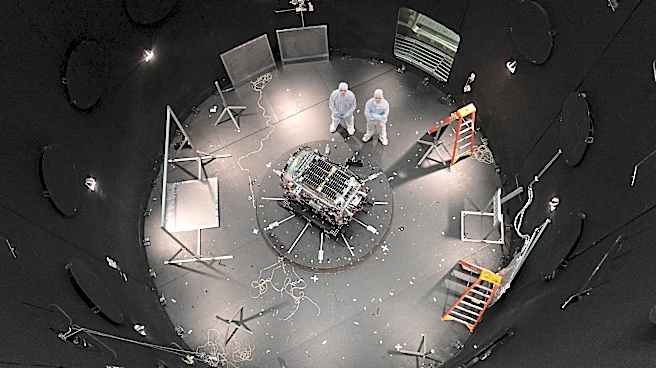
NASA has initiated a mission to elevate the orbit of the Neil Gehrels Swift Observatory, which launched from Kwajalein Atoll in the Marshall Islands. The mission, executed on July 3, 2026, involved the deployment of the LINK robotic servicing spacecraft,
built by Katalyst Space, using a Northrop Grumman Pegasus XL rocket. This rocket was released from the Stargazer, a modified L-1011 aircraft, at an altitude of approximately 40,000 feet. The mission aims to counteract the effects of atmospheric drag, which has been exacerbated by recent solar activity, causing the Swift Observatory's orbit to decay faster than expected. NASA contracted Katalyst Space in September to design, build, and launch the LINK spacecraft to meet and elevate Swift's orbit.
Why It's Important?
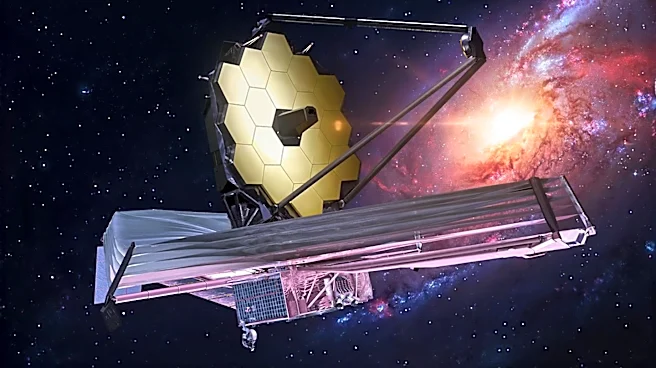
This mission is crucial for maintaining the operational capabilities of the Swift Observatory, which plays a significant role in observing gamma-ray bursts and other cosmic phenomena. The decay of its orbit due to atmospheric drag could compromise its ability to collect valuable scientific data. By boosting the observatory's altitude, NASA ensures the continuation of its scientific missions, which contribute to our understanding of the universe. The successful deployment of the LINK spacecraft also demonstrates the capabilities of private aerospace companies like Katalyst Space in supporting NASA's objectives, highlighting the growing collaboration between public and private sectors in space exploration.
What's Next?
Following the successful launch, the next steps involve acquiring a signal from the LINK spacecraft to confirm the deployment of its solar panels and the functionality of its power systems. NASA will continue to monitor the mission's progress and provide updates through its Swift blog. The success of this mission could pave the way for future collaborations and similar missions to extend the life of other satellites and observatories facing similar challenges.