


What's Happening?
Gasoline prices in the United States have experienced a significant increase, rising by more than $0.48 to an average of $3.46 per gallon in the first week of the conflict in Iran. This surge is attributed to the ongoing tensions in the Middle East, particularly
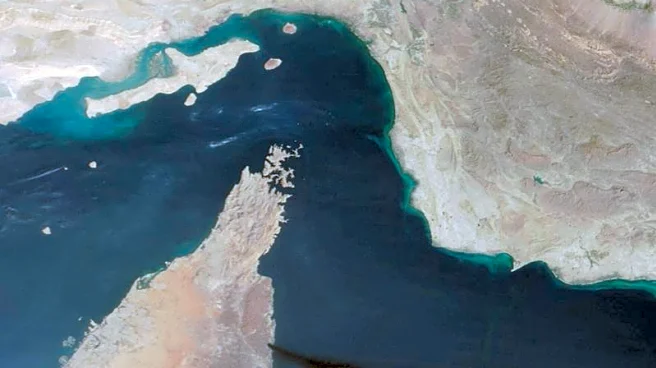
the actions of Iran's Islamic Revolutionary Guard Corps, which has threatened to block oil shipments through the Strait of Hormuz. The Trump administration is considering deploying U.S. Navy escorts for tankers in the region, although no immediate action has been taken. Historical precedents, such as the 1973 OPEC oil embargo and the 1979 Iranian Revolution, suggest that such geopolitical tensions can lead to prolonged periods of elevated oil prices.
Why It's Important?
The rise in gas prices has significant implications for the U.S. economy, potentially affecting consumer spending and inflation rates. Higher fuel costs can lead to increased transportation and production expenses, which may be passed on to consumers in the form of higher prices for goods and services. This situation could strain household budgets and slow economic growth. Additionally, the energy sector may experience volatility, impacting investments and market stability. The potential for prolonged high prices could also influence U.S. energy policy and international relations, as the country navigates its response to the geopolitical tensions in the Middle East.
What's Next?
If the conflict in Iran continues, gas prices may remain elevated or even increase further, depending on the severity of disruptions in oil supply. The U.S. government may need to consider strategic responses, such as increasing domestic oil production or seeking alternative energy sources, to mitigate the impact on the economy. Additionally, diplomatic efforts may be necessary to de-escalate tensions and ensure the free flow of oil through critical shipping routes. The situation will likely require close monitoring by policymakers and industry stakeholders to address potential economic and geopolitical challenges.
Beyond the Headlines
The current situation highlights the vulnerability of global oil markets to geopolitical events, underscoring the need for diversified energy sources and increased energy independence. The reliance on oil from politically unstable regions poses risks to national security and economic stability. This may prompt renewed discussions on energy policy, including investments in renewable energy and infrastructure to reduce dependence on foreign oil. The conflict also raises ethical considerations regarding the environmental impact of increased oil production and consumption, as well as the human cost of geopolitical conflicts.