





What's Happening?
New documents obtained by the Animal Welfare Institute (AWI) from the Utah Department of Agriculture and Food (UDAF) confirm the first documented outbreak of highly pathogenic avian influenza (HPAI), or H5N1, in captive mink in the United States. The
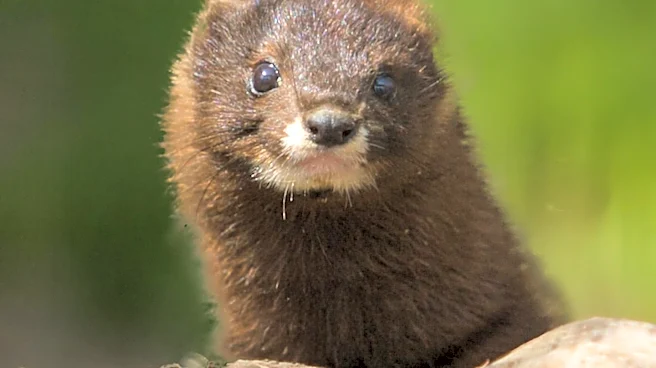
outbreak occurred on a Utah mink farm in August, with animals 'dying slowly' and the farm expecting to lose 80% of its mink. The records suggest that neither UDAF nor the U.S. Department of Agriculture (USDA) had a response plan for such an event. Important biosecurity measures, such as placing the farm under quarantine, were not implemented. UDAF officials expressed uncertainty about protocol and decided against quarantine, reasoning that 'nothing live leaves the [farm],' a rationale that overlooks risks from farm workers, equipment, wild animals, and potential escapes. As of September 4, the USDA had not urgently responded to UDAF's request for emergency vaccination authorization.
Why It's Important?
This HPAI outbreak in U.S. captive mink is a significant public health concern. Mink are particularly susceptible to influenza viruses because their upper respiratory tracts are physiologically similar to humans, making them potential 'mixing vessels' for viruses to mutate and become more dangerous to people. Crowded conditions on fur farms create an ideal environment for pathogens to circulate and evolve. A mutation that facilitates mammal-to-mammal spread, as observed in a Spanish mink farm outbreak in 2022, could significantly increase the risk of a human pandemic. The lack of preparedness and inadequate response from state and federal officials highlight a critical vulnerability in public health defenses, demonstrating how mink farming operates with insufficient oversight. This incident underscores the urgent need to address the public health threat posed by mink farming.
What's Next?
The Animal Welfare Institute is calling on federal and state lawmakers to swiftly address this public health threat by phasing out mink farming in the U.S. They are advocating for the Mink: Vectors for Infection Risk in the United States Act (Mink VIRUS Act), which would establish a one-year phaseout of mink fur farms and create a grant program to reimburse farmers. Additionally, AWI supports the Finding Urgent Relief from Vectors for Infection Risk and Unchecked Spillover (FUR VIRUS) Act in Illinois, which would bar the establishment of new fur farms. The current outbreak is expected to intensify legislative efforts to regulate or eliminate mink farming. The scientific community will likely continue to monitor the H5N1 virus in mink populations for mutations that could increase human transmissibility, emphasizing the need for robust surveillance and rapid response mechanisms.
Beyond the Headlines
The HPAI outbreak in Utah mink farms exposes a deeper ethical and systemic issue regarding the intersection of animal agriculture, public health, and environmental risk. The 'One Health' concept, which recognizes the interconnectedness of human, animal, and environmental health, is starkly illustrated here. The crowded, often unsanitary conditions inherent in fur farming create a perfect breeding ground for zoonotic diseases, posing a direct threat to human populations. The reluctance or inability of regulatory bodies to implement immediate and stringent biosecurity measures, such as quarantine, reflects a systemic gap in preparedness and oversight. This incident forces a re-evaluation of the economic benefits of industries like fur farming against their potential to trigger global health crises, prompting a broader societal debate on sustainable and ethical practices that prioritize public well-being over commercial interests.