




What's Happening?
Myanmar continues to face significant political and humanitarian challenges in 2024, with the military junta that seized power in February 2021 still in control. The coup led to widespread protests and armed resistance, plunging the country into an ongoing
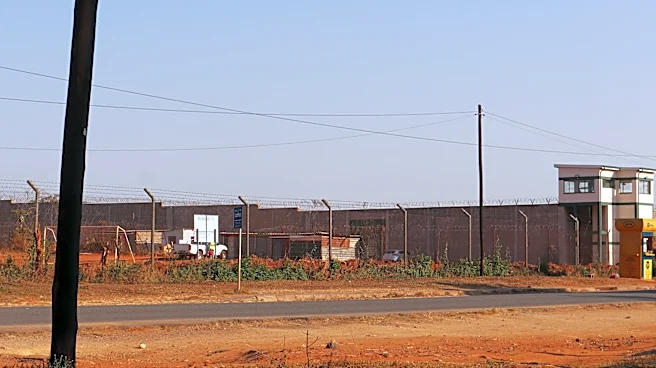
civil war. The military-backed government maintains strict controls over information and media reporting, making it difficult to obtain accurate details on sensitive criminal cases. Notably, Myanmar authorities have remained tight-lipped about the death of a U.S. diplomat in May and the subsequent imprisonment of his Thai partner, Pavinee Supasirivisan, who faces potential trial and a possible death sentence for the murder. The international community continues to grapple with how to address Myanmar's situation, balancing human rights concerns with principles of non-interference. The lack of transparency surrounding the diplomat's death and Supasirivisan's detention highlights the challenges in obtaining reliable information from the country under its current regime.
Why It's Important?
The silence from Myanmar authorities regarding the death of a U.S. diplomat and the imprisonment of his Thai partner carries significant implications for international relations and human rights. For the U.S., the lack of information surrounding the death of one of its diplomats is a serious concern, potentially straining diplomatic ties with Myanmar and raising questions about the safety of its personnel abroad. The potential death sentence for Pavinee Supasirivisan, coupled with the opaque legal process, raises alarms for human rights organizations and international legal bodies. This situation underscores the broader challenges faced by the international community in holding the Myanmar junta accountable for its actions and ensuring due process for individuals within its jurisdiction. It also highlights the difficulties in providing consular assistance and advocating for citizens in countries with limited transparency and rule of law.
What's Next?
The international community will likely continue to pressure Myanmar for transparency regarding the U.S. diplomat's death and the legal proceedings against Pavinee Supasirivisan. Diplomatic efforts from the U.S. and Thailand are expected to intensify to secure more information and ensure a fair trial for Supasirivisan. Human rights organizations will likely monitor the case closely and advocate for her rights. The ongoing civil conflict in Myanmar and the military junta's firm grip on power suggest that obtaining full transparency and a just resolution will be a protracted and challenging process. The case could further complicate international efforts to address the broader political and humanitarian crisis in Myanmar, potentially leading to increased sanctions or other diplomatic measures from concerned nations.
Beyond the Headlines
The case of the U.S. diplomat's death and Pavinee Supasirivisan's imprisonment in Myanmar extends beyond a singular criminal investigation, touching upon deeper issues of state sovereignty, international law, and human rights in a nation under military rule. The junta's tight control over information and its legal processes reflects a broader pattern of suppressing dissent and maintaining power through opaque means. This incident could serve as a critical test case for how the international community navigates consular protection and legal advocacy in authoritarian regimes. It also highlights the ethical dilemmas faced by nations when their citizens are entangled in legal systems that do not adhere to international standards of justice. The long-term implications could include a re-evaluation of diplomatic engagement strategies with Myanmar and increased scrutiny of its human rights record by global bodies.