


What's Happening?
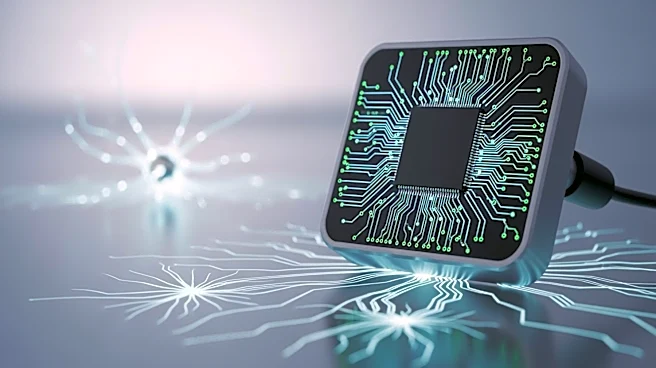
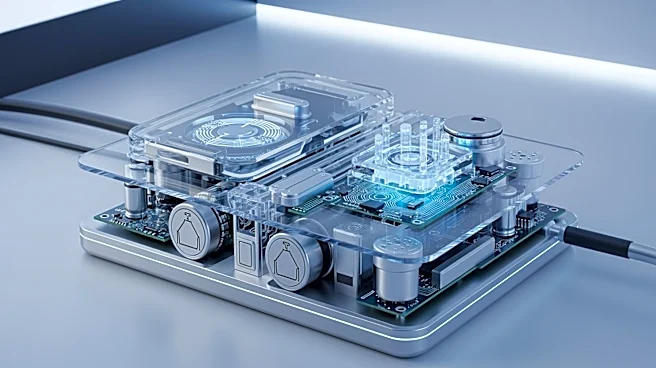
Researchers at North Carolina State University have developed CAMEO, a new sensor technology that records electrical activity in human cerebral organoids. This innovation addresses the challenges of monitoring neurophysiological processes in brain models,
which are crucial for studying neurodevelopmental disorders. CAMEO uses carbon nanotube technology to create a flexible, affordable sensor that enhances signal capture without damaging tissue. This breakthrough could democratize access to high-quality electrophysiological data, facilitating large-scale studies and accelerating discoveries in genetic disorder research.
Why It's Important?
CAMEO's affordability and scalability could transform research into neurodevelopmental disorders by enabling more extensive and statistically robust studies. This technology provides a new tool for understanding complex brain functions and developing treatments for conditions like Angelman syndrome. By reducing costs and improving data quality, CAMEO could lead to faster advancements in neuroscience and personalized medicine, ultimately benefiting patients with genetic disorders.