
What's Happening?
The International Monetary Fund (IMF) has issued a warning that the ongoing conflict in Iran is negatively impacting the global economic outlook, even as a ceasefire has been announced. According to IMF Managing
Director Kristalina Georgieva, the war has led to a downgrade in the global growth forecast, which was initially set to be upgraded to 3.3% for the year. The conflict, which began on February 28, has caused significant disruptions in energy supplies, leading to increased oil and natural gas prices. This has affected global supply chains and consumer confidence. The United States and Iran reached a ceasefire on April 7, following a warning from President Trump about the potential for widespread devastation. Despite the ceasefire, Georgieva emphasized that economic growth will remain slower, particularly affecting regions like Sub-Saharan Africa and small island nations that are vulnerable to energy shocks.
Why It's Important?
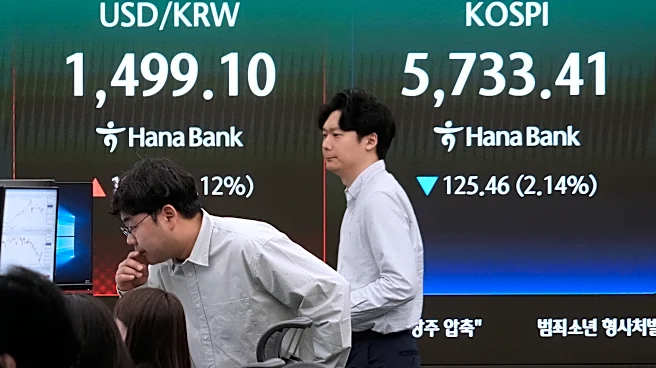
The IMF's warning highlights the broader implications of geopolitical conflicts on global economic stability. The war in Iran has not only disrupted energy markets but also heightened inflationary pressures worldwide. This situation poses a significant challenge for policymakers who must balance economic recovery efforts with managing inflation. Countries with high debt levels have limited capacity to mitigate these impacts through fiscal measures. The IMF's caution against 'go-it-alone' policies underscores the need for coordinated international responses to prevent exacerbating the economic fallout. The situation also serves as a reminder of the interconnectedness of global economies and the potential for regional conflicts to have far-reaching consequences.
What's Next?
The IMF is set to release its updated global economic forecasts next week during the IMF-World Bank spring meetings. Policymakers will need to consider strategies to address the ongoing energy crisis and its economic repercussions. The focus will likely be on maintaining economic stability while avoiding measures that could worsen the situation, such as export restrictions or price controls. The ceasefire between the United States and Iran provides a temporary reprieve, but the potential for renewed hostilities remains a concern. The international community will be closely monitoring the situation to assess the need for further economic interventions.