






What's Happening?
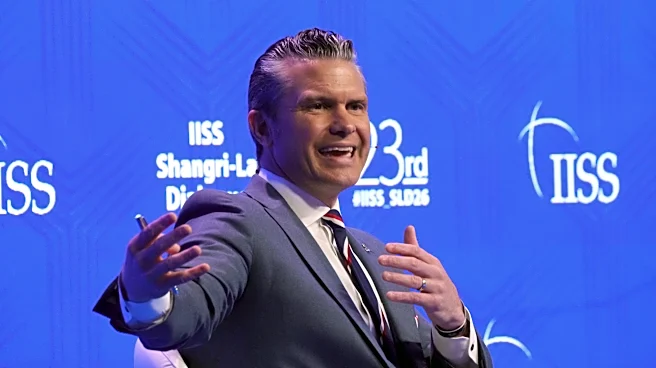
Japan's Defense Minister, Shinjiro Koizumi, has refuted accusations from China that Japan is adopting a 'new militarism' approach. Speaking at the Shangri-La Dialogue in Singapore, Koizumi emphasized Japan's commitment to strengthening its military capabilities
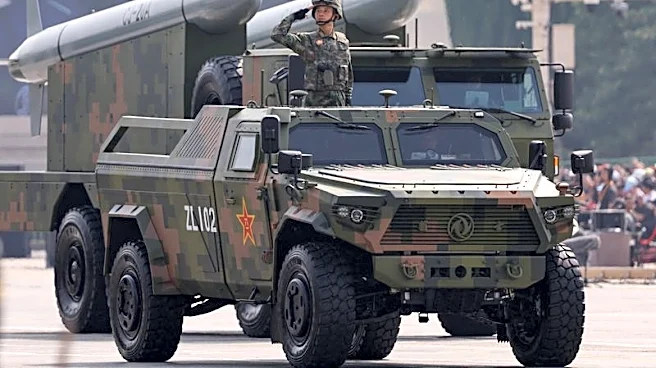
while maintaining transparency. This comes in response to China's criticism of Japan's evolving defense policy under Prime Minister Sanae Takaichi, which has been encouraged by the United States. The accusations from China suggest that Japan's actions could destabilize the region. Koizumi countered these claims by highlighting Japan's lack of nuclear weapons and strategic bombers, contrasting it with China's significant military arsenal. The dialogue between the two nations has been tense, especially after Japan's suggestion of potential military intervention if China attempts to seize Taiwan.
Why It's Important?
The ongoing tension between Japan and China has significant implications for regional stability in Asia. Japan's shift towards a more proactive defense policy, supported by the U.S., marks a departure from its post-World War II pacifist stance. This development could influence the balance of power in the region, particularly concerning Taiwan, which China claims as its territory. The situation underscores the broader geopolitical dynamics involving major powers like the U.S., China, and Japan. As Japan continues to enhance its defense capabilities, including in areas like artificial intelligence and cyber defense, it may lead to increased military competition and strategic recalibrations in the Asia-Pacific region.
What's Next?
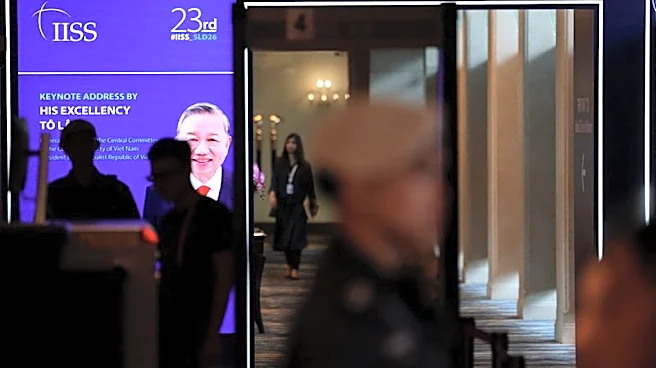
Japan is expected to continue its defense build-up with a focus on transparency, as stated by Koizumi. This includes advancements in uncrewed systems and space defense. The ongoing dialogue at forums like the Shangri-La Dialogue will be crucial in managing tensions and fostering communication between Japan, China, and other regional stakeholders. The absence of China's defense minister from the dialogue for the second consecutive year highlights the challenges in diplomatic engagement. Future interactions between Japan and China will likely focus on addressing mutual concerns and preventing escalation, particularly regarding Taiwan and regional security.