
What's Happening?
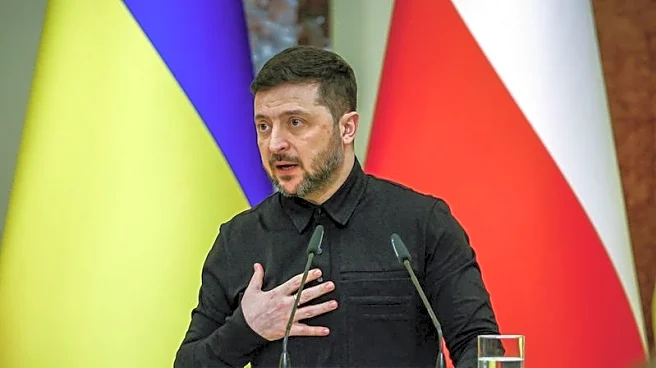
Ukrainian President Volodymyr Zelenskyy has expressed a willingness to abandon Ukraine's pursuit of NATO membership in exchange for security guarantees from Western nations. This development comes as Zelenskyy engages
in discussions with U.S. envoys, including President Trump's special envoy Steve Witkoff and Jared Kushner, to negotiate an end to the ongoing conflict with Russia. Zelenskyy emphasized the need for legally binding security assurances from the U.S. and European allies, similar to those provided to NATO members, as a compromise to prevent further Russian aggression. Despite this potential concession, Zelenskyy firmly rejected any proposals that would require Ukraine to cede territory to Russia, particularly in the contested Donetsk region.
Why It's Important?
The potential shift in Ukraine's NATO aspirations marks a significant change in its foreign policy, which could have profound implications for regional security dynamics. By seeking security guarantees outside of NATO, Ukraine aims to secure its sovereignty while addressing one of Russia's key demands. This move could influence the broader geopolitical landscape, affecting U.S. and European relations with both Ukraine and Russia. The outcome of these negotiations may set a precedent for how international security guarantees are structured and could impact future conflicts involving non-NATO countries seeking protection from larger powers.
What's Next?
As negotiations continue, the focus will likely be on defining the specifics of the security guarantees Ukraine seeks and how they will be enforced. The U.S. and European nations will need to balance their support for Ukraine with diplomatic relations with Russia. The potential for a peace agreement hinges on the ability of all parties to reach a consensus on territorial and security issues. The international community will be closely monitoring these developments, as any agreement could influence future diplomatic strategies and security arrangements in Eastern Europe.