



What's Happening?
Foxconn, the world's largest electronics manufacturing services provider, has established Vietnam's first Lighthouse factory, which has shown significant growth in productivity and revenue. The factory is part of the Global Lighthouse Network, a benchmark
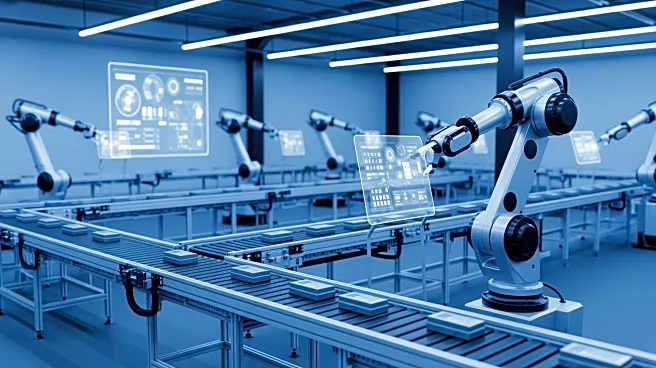
for smart manufacturing that includes 201 factories worldwide. These factories utilize advanced technologies such as AI, automated robotics, and IoT to enhance productivity, reduce costs, and lower carbon emissions. Foxconn's Vietnam facility has seen a 50% increase in workplace productivity over the past decade, with an 83% revenue surge in 2025 alone. The company emphasizes corporate culture transformation, workforce development, and a clear technology roadmap as key factors in its success.
Why It's Important?
The development of Lighthouse factories in Vietnam represents a significant shift towards advanced manufacturing, positioning the country as a potential new hub in the global supply chain. This transformation is crucial as it aligns with global trends towards greener and more resilient supply chains. The success of Foxconn's Vietnam factory highlights the potential for other countries to leverage technology for economic growth. The focus on digital transformation and innovation could lead to increased competitiveness for Vietnam in the global market, benefiting both large corporations and SMEs. This shift also supports Vietnam's strategic goals of sustainable development and resilience.
What's Next?
Vietnam plans to increase the number of Lighthouse factories, with a focus on enhancing digitalization, automation, and data governance. The government is prioritizing areas that facilitate access to the Lighthouse model and is building a supportive ecosystem, including infrastructure and digital platforms. The Ministry of Science and Technology is developing a comprehensive program for strategic technology development, aiming to place enterprises at the heart of innovation. New laws on AI, digital transformation, and high technology are being drafted to create a favorable environment for business development. Vietnam is also opening its doors to attract global experts and technology corporations to support this transformation.
Beyond the Headlines
The rise of Lighthouse factories in Vietnam could have broader implications for the global manufacturing landscape. As more countries adopt similar models, there could be a shift in global production patterns, with increased emphasis on sustainability and innovation. This could lead to a redefinition of competitive advantages in manufacturing, with technology and innovation playing a central role. The focus on digital transformation and workforce development could also influence labor markets, requiring new skills and training programs. Additionally, the emphasis on reducing carbon emissions aligns with global efforts to combat climate change, potentially setting new standards for environmental responsibility in manufacturing.