






What's Happening?
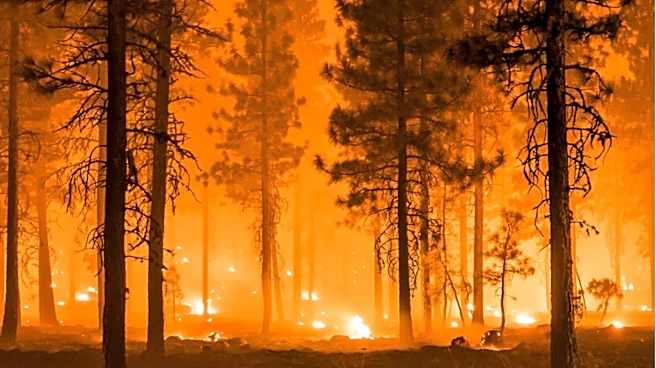
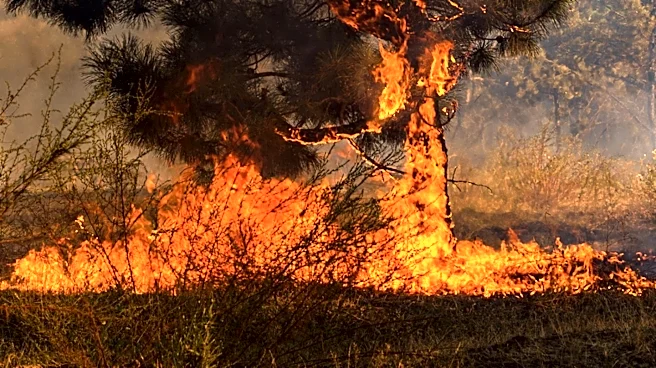
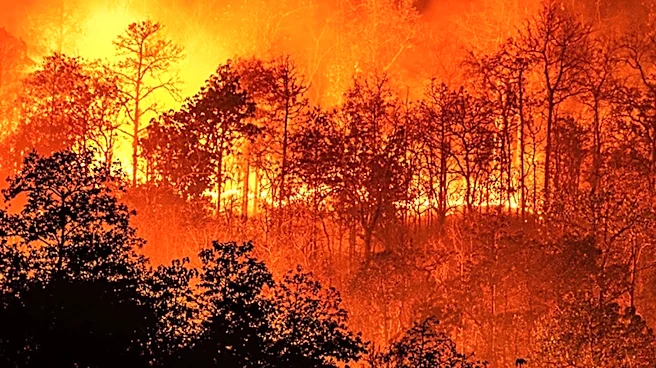
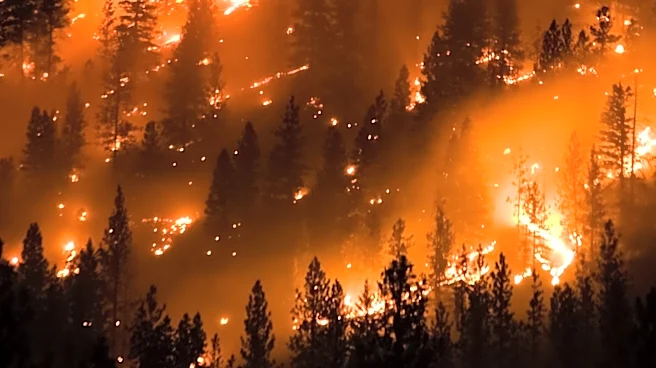
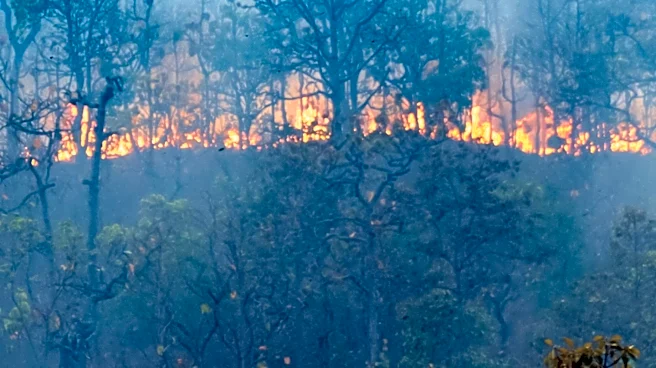
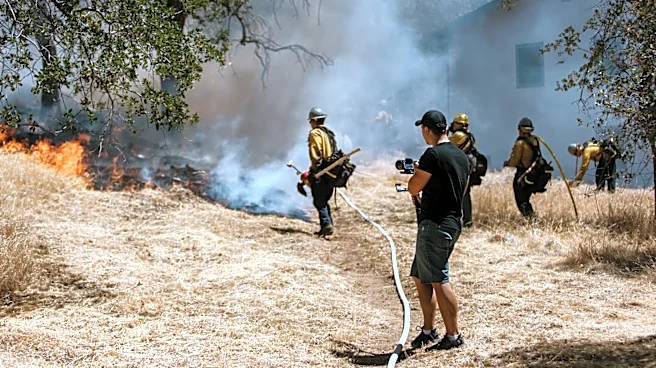
A video has surfaced showing a freight train surrounded by intense wildfires in rural Canada, specifically near Armstrong, Ontario. The footage, shared by Ontario lawmaker Sol Mamakwa, depicts the train crew expressing concern about being trapped by the encroaching
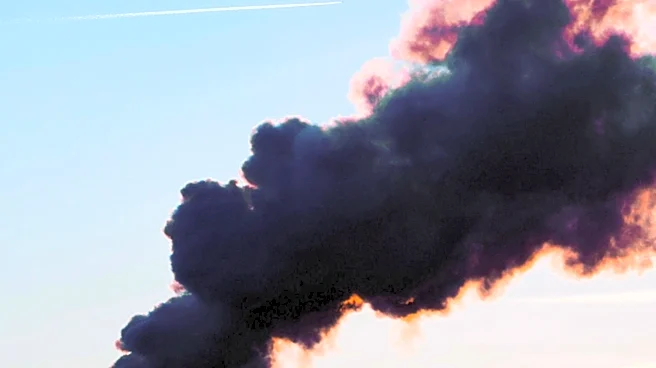
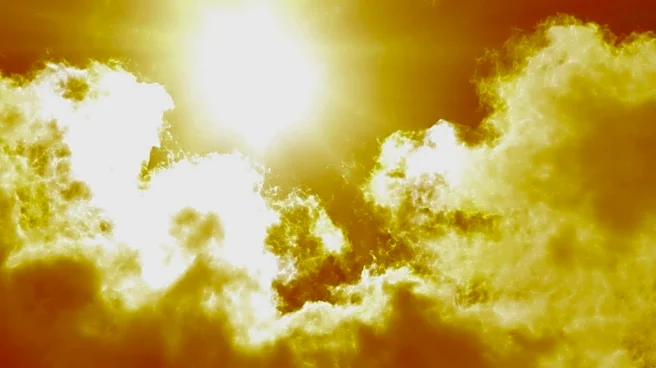
flames. The Canadian National Railway confirmed that three trains carrying flammable materials were halted in the area due to the fires. The crew was evacuated as a precaution. The wildfires, which have turned the sky a vivid orange, are now threatening to send smoke plumes towards the Great Lakes and the northeastern United States. Meteorologists have warned that cities such as Boston, New York City, and Philadelphia could experience smoke levels similar to those seen in June 2023, when New York was blanketed in an orange haze.
Why It's Important?
The potential spread of smoke from Canadian wildfires to the northeastern U.S. could have significant health and environmental impacts. Air quality in major urban centers like New York City, Boston, and Philadelphia may deteriorate, posing risks to individuals with respiratory conditions and affecting outdoor activities. The situation underscores the interconnectedness of environmental events across borders and highlights the need for coordinated responses to mitigate health risks. Additionally, the incident raises concerns about the safety of transporting flammable materials through wildfire-prone areas, prompting discussions on infrastructure resilience and emergency preparedness.
What's Next?
As the wildfires continue to burn, authorities in both Canada and the U.S. are likely to monitor air quality closely and issue advisories as needed. Emergency services may prepare for potential health impacts in affected U.S. cities. The situation could prompt further discussions on cross-border environmental policies and the need for improved fire management strategies. In the immediate term, efforts will focus on containing the fires and ensuring the safety of communities and infrastructure in the affected regions.