



What's Happening?
A federal judge is primarily focusing on due process issues in a case challenging the Trump administration's ban on certain press outlets. Andrew Weissmann, a former federal prosecutor and general counsel of the FBI, noted that while First Amendment grounds
are also relevant, the judge's emphasis during oral arguments was on due process. This approach is consistent with a previous ruling in 2018 involving journalist Jim Acosta, where the judge sided with the journalist on due process grounds regarding the revocation of his press pass. The Trump administration has cited national security as a rationale for the ban, claiming the outlets were 'trafficking in verifiable falsehoods about national security and other issues and publishing sensitive or classified information.' However, Weissmann highlighted instances where the administration's national security claims appeared pretextual, such as citing a government document as a national security breach when the government itself had published it two months prior.
Why It's Important?
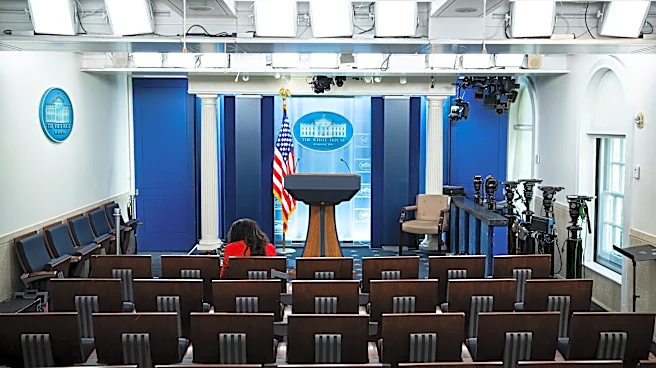
This case is significant because it scrutinizes the executive branch's power to restrict press access, particularly when invoking national security. The judge's focus on due process underscores the importance of fair procedures and established legal rights, even in matters of national security. If the court rules against the administration on due process grounds, it could set a precedent that limits the government's ability to arbitrarily revoke press credentials, thereby safeguarding journalistic access and the public's right to information. The administration's use of national security as a justification, which Weissmann suggests may be pretextual, raises concerns about potential abuses of power and attempts to control narratives. This legal challenge tests the boundaries of executive authority versus press freedom and due process rights, impacting how future administrations might interact with the media and potentially influencing the transparency of government operations. The outcome could reinforce the judiciary's role in checking executive power, especially when fundamental rights are at stake.
What's Next?
The judge is expected to issue a written opinion, which could either uphold or overturn the Trump administration's press ban. Given the judge's focus on due process during oral arguments, a ruling based on these grounds is a strong possibility, similar to the Jim Acosta case. Such a ruling would likely compel the administration to reinstate press credentials for the affected outlets or establish clear, non-arbitrary procedures for any future restrictions. The decision will be closely watched by media organizations, legal experts, and civil liberties advocates, as it will clarify the legal protections for journalists operating within the White House and other government institutions. Depending on the ruling, either the administration or the affected press outlets may consider appeals, potentially elevating the case to higher courts. This legal process will continue to define the relationship between the executive branch and the press, particularly concerning the invocation of national security as a justification for restricting access.
Beyond the Headlines
The legal challenge to the Trump administration's press ban delves into the deeper implications of government transparency and the role of a free press in a democratic society. The repeated use of 'national security' as a defense, even when seemingly pretextual, raises questions about the erosion of trust between the government and the media. As Andrew Weissmann noted, judges, including the Chief Justice of the United States, are becoming more skeptical of such claims, emphasizing that the invocation of national security must not be pretextual. This skepticism reflects a broader concern about the weaponization of national security arguments to suppress dissent or control information. The case highlights the ongoing tension between the government's need to protect sensitive information and the public's right to be informed, often through the work of journalists. The outcome could contribute to a re-evaluation of the standards for press access and the legal framework protecting journalists from arbitrary exclusion, potentially strengthening the checks and balances essential for a healthy democracy.