




What's Happening?
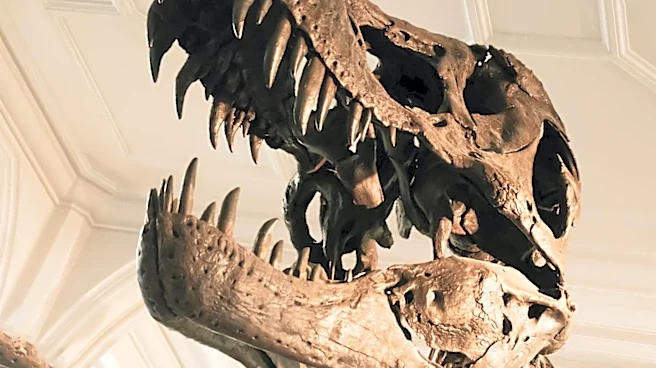
A Tyrannosaurus rex fossil, known as 'Gus', is set to be auctioned at Sotheby's in New York City, with a starting bid of $19 million. The fossil, discovered in Harding County, South Dakota, in 2021, is one of the largest and most complete T. rex specimens
ever found. The auction house estimates that the sale could reach between $20 to $30 million. The fossil was excavated by Theropoda Expeditions, and the site was originally discovered by Gary 'Gus' Licking, after whom the dinosaur is named. Unfortunately, Licking passed away during the excavation process. The auction highlights a growing trend of high-value dinosaur fossil sales, with previous notable sales including a T. rex named Sue and a stegosaurus named Apex.
Why It's Important?
The auction of 'Gus' underscores the increasing market demand for dinosaur fossils, which are fetching record prices. This trend raises questions about the allocation of resources in paleontology, as significant sums are spent on private collections rather than public research and education. Paleontologist Scott Persons suggests that such funds could support extensive research programs, potentially leading to new discoveries and public exhibitions. The sale of 'Gus' also reflects broader economic dynamics, where rare and unique items become investment opportunities for wealthy individuals, potentially limiting public access to important scientific artifacts.
What's Next?
The auction of 'Gus' is likely to attract significant attention from private collectors and institutions. Depending on the outcome, the fossil could end up in a private collection or be loaned to a museum for public display. The sale may also influence future fossil auctions, setting new benchmarks for pricing. Additionally, there may be increased calls from the scientific community for more fossils to be preserved in public institutions to ensure broader access for research and education.